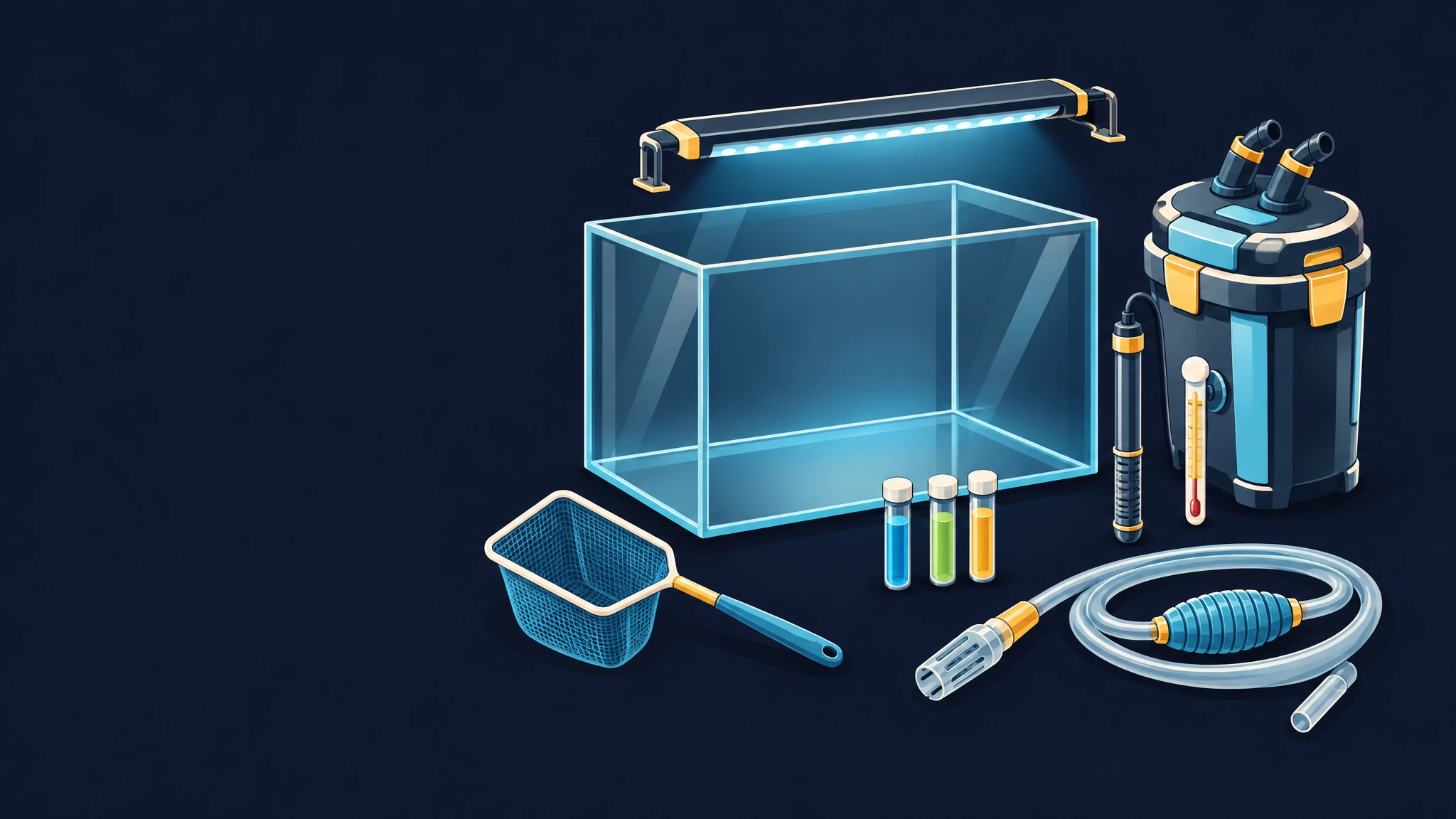
Illustrated exploded view of an aquarium kit with tank, LED light, filter, heater and test vials
Shop by pet / Aquariums and equipment

Kit, lighting and water care

Aquarium supplies in Bury St Edmunds

Aquarium supplies in Bury St Edmunds, from filtration and LED lighting to test kits and treatments, at a listed D-D The Aquarium Solution stockist. Here is how to choose each piece, from the tank to the first water test.

Fornham All Saints, just off the A14 near Bury St Edmunds. Open seven days.

In the shop

What we stock for aquariums

Aquariums and cabinetsFilters, heaters and lightingFish treatmentsFrozen fish foodRO waterMarine salt and mixed saltwaterLive plants

All in the shop at Fornham All Saints, with the team on hand to help you choose. We also offer water testing in the shop. Ask the team when you call or visit.

Brands we stock

Our aquarium range includes Juwel, Fluval, Eheim, Oase and Aqua One, with JBL, Seachem, API, Tetra and D-D The Aquarium Solution alongside.

  • Tetra logo
  • Juwel logo
  • Eheim logo
  • Fluval logo
  • JBL logo
  • Oase logo
  • Red Sea logo
  • Seachem logo
  • Hikari logo
  • D-D The Aquarium Solution logo
  • API logo
  • Aqua One logo
  • NT Labs logo
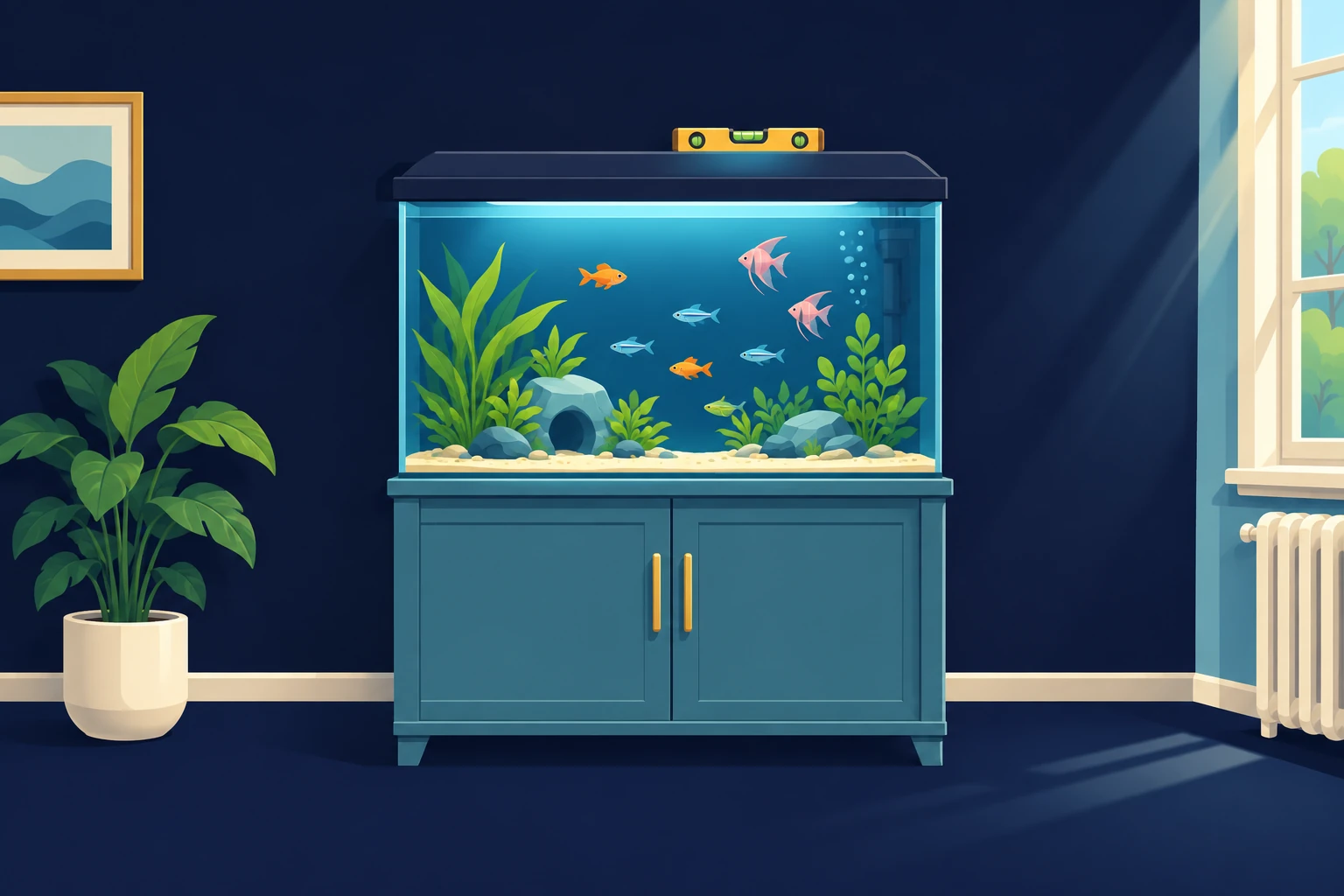
Illustration of an aquarium on a sturdy cabinet stand away from a window and radiator

The basics

Choosing a tank size, and where to put it

Go as big as your space and budget allow. More water dilutes waste, so conditions stay steadier. The RSPCA says a tank should be larger than about 40 litres, and Practical Fishkeeping calls 60 to 80 litres ideal for a first tank.

Remember the weight: a litre of water weighs a kilogram, so a 100 litre tank holds about 100kg of water before you add glass, substrate and rock. Use a purpose-made stand or a level, sturdy surface. Keep the tank away from windows, radiators, vents, speakers and doors, and leave room for a lid, which keeps heat in and fish in. Think about a socket you can reach, and about how you will get an arm and a bucket in for water changes.

Complete kits usually bundle a filter, a light and sometimes a heater, but no kit includes everything, so check what is missing before you buy.

Choosing fish next? Start with our tropical fish page.

At a glance

Filters compared: sponge, hang-on and canister

Every tank needs a filter, and the RSPCA says no fish should be kept in a tank without a well set up and maintained one. A common target is a rated flow of five to ten times the tank's volume per hour.

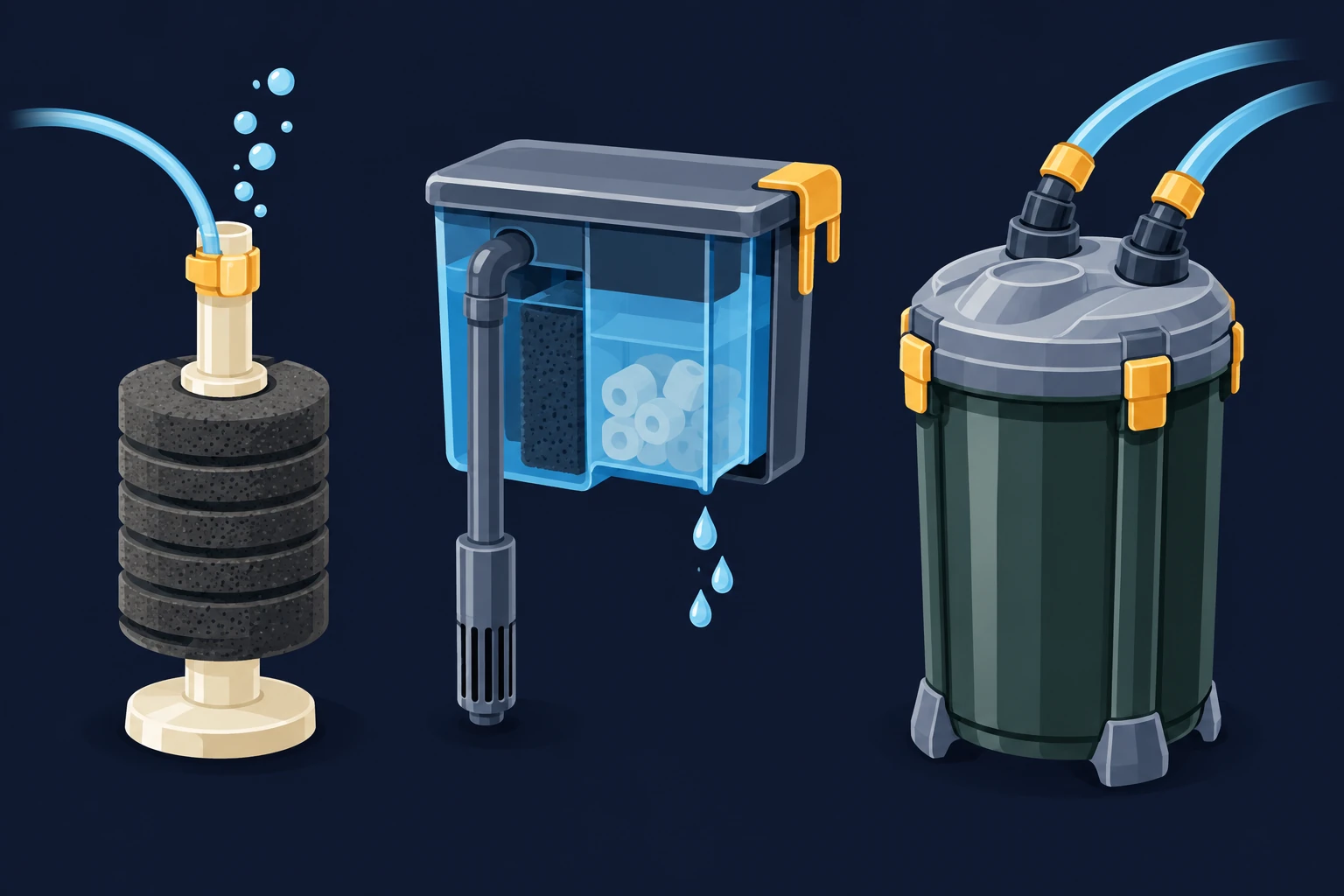
Illustrated comparison of a sponge filter, a hang-on-back filter and a canister filter
TypeHow it worksGood for
Sponge filterA sponge on a riser tube, driven by an air pumpSimple set-ups. Easy to clean by squeezing in old tank water
Hang-on-backA pump lifts water into a box that hangs on the rimThe most common external option
CanisterA sealed box that forces all the water through the mediaLarger tanks and heavier stocking

Whichever you choose, never rinse the media under the tap. Chlorine kills the bacteria that keep the water safe.

The range

Heating and LED lighting

01

Heating

Tropical fish need warmth, and most community fish sit somewhere between about 24 and 27°C. A common guide is at least one watt of heater per litre. Buy a separate thermometer, because a heater dial is not one. Needs vary by species: the RSPCA notes that guppies tolerate 22 to 28°C while some loaches want 18 to 26°C, so check your fish before you set the temperature.

02

LED lighting

Light is mainly for viewing and for plants. Start with six to eight hours a day on a timer at modest brightness, around 20 to 40% if your light dims, and raise it slowly only if no algae appears. Algae comes from light plus water plus nutrients, and lots of blue light encourages it. Reef lighting is a different job, so see our marine fish page.

The range

Water conditioner, test kits and dosing: the essentials

Tap water needs treating, and the tank needs watching.

01

Water conditioner

Chlorine in tap water is dangerous to fish and to filter bacteria, so treat every top-up and water change with a dechlorinating conditioner.

02

Ammonia and nitrite tests

The RSPCA calls these essential, not optional extras. Both should read zero in a cycled tank. Test every other day while cycling, then at least once a week.

03

Nitrate and pH tests

Nitrate shows when a water change is due, and pH is worth knowing before you choose fish.

04

Siphon and bucket

About 25% once a week suits most tanks, and a siphon does the job, lifting waste from the substrate as it drains the water. Keep a bucket for the tank only, and never use soap.

05

Fertiliser and dosing

Dosing means adding measured amounts of fertiliser or supplements on a schedule. Plants need more than fish waste supplies, so many planted tanks use a liquid fertiliser. Start with the label, test weekly and adjust, because too much feeds algae. Reef tanks often dose calcium and alkalinity, sometimes with a dosing pump.

Illustrated sand, gravel, rock, driftwood and a small plant laid out for aquascaping

Good to know

Substrate and aquascaping materials

Sand or gravel? Fine sand suits bottom-feeders such as corydoras, whose whiskers can be damaged by gravel, and about 2.5cm deep is typical. Gravel is usually laid a little deeper, around 5cm. Rinse either before use. Some substrates, such as dolomite and coral sand, raise pH and hardness, which is wrong for soft-water fish.

Rock and wood give a tank its character. Limestone and other calcareous rock can raise hardness. Shop-bought bogwood and mopani are safe bets, but they leach tannins that tint the water brown until they are soaked, which can take days, or weeks for dense pieces. Slate can have sharp edges. Avoid vivarium wood such as grapevine, which rots. Scrub everything before it goes in.

Stock changes, so call or pop in to see what's in. If we haven't got what you're after, ask. We can order it in, take your number and call you when it's here, or suggest something similar.

Step by step

A starter checklist

No kit includes everything, so tick these off before the fish come home.

Step 1

A tank and a sturdy, level stand

Placed away from windows, radiators and doors.

Step 2

A lid and lighting

With the light on a timer.

Step 3

A filter

With a rated flow of five to ten times the tank's volume.

Step 4

A heater and a separate thermometer

For tropical fish.

Step 5

Substrate, rock, wood and plants

Rinsed or soaked before they go in.

Step 6

Water conditioner, test kits, a siphon and a bucket

Kept for the tank only.

Step 7

Time

Cycle the tank before any fish arrive; a fishless cycle generally takes four to six weeks.

Step 8

Fish, a few at a time

Once you have asked us what suits.

Tick those off and the fish become the easy part.

Worth a call

D-D The Aquarium Solution, and how we can help

We are a listed stockist of D-D The Aquarium Solution, whose range covers LED lighting, pumps, filtration, water testing, aquascaping materials, dosing systems, treatments and supplements. We also stock Juwel, Fluval, Eheim, Oase and Aqua One. Which products are in the shop changes, so call or pop in to see what's in. We cannot promise a particular model is on display.

Bring your tank's dimensions, a note of the space it is going in and what you would like to keep, and we will talk through what suits. Prefer a pond? See our pond supplies page.

Before you visit

Aquariums and equipment, your questions answered

See all our questions ↗
What size tank should I start with?+

The RSPCA says a tank should be larger than about 40 litres, and Practical Fishkeeping calls 60 to 80 litres ideal for a first tank. Bigger is easier, because more water dilutes waste and keeps conditions steadier. Check the weight too, as a litre of water weighs a kilogram. Tell us your space and we will talk through the options.

Do I need a heater and a thermometer?+

For tropical fish, yes. Most community fish sit between about 24 and 27°C, and a common guide is at least one watt of heater per litre. Buy a separate thermometer, because a heater dial is not one. Goldfish are different: the RSPCA says they usually do not need a heater at all.

How long should the aquarium light be on?+

Start with six to eight hours a day on a timer, at modest brightness, and only raise it if no algae appears. Too much light, especially blue light, encourages algae. The aim is a steady routine, not a brighter tank. Reef tanks need different lighting, so ask us before you buy for a marine set-up.

Which water tests do I need?+

The RSPCA calls ammonia and nitrite kits essential, and nitrate and pH are worth adding. Test every other day while the tank cycles, then at least once a week, and straight away if fish look unwell. Liquid kits and strips both work by comparing a colour chart, so read the instructions closely. For sick fish, speak to a vet or fish health specialist too.

Do I need a water conditioner?+

Yes. Tap water is treated to make it safe to drink, which is not the same as safe for fish. The RSPCA says chlorine in tap water is dangerous to both fish and bacteria, so use a dechlorinating conditioner with every water change and top-up. Rinse filter media in old tank water rather than under the tap, for the same reason.

How we can help

Aquarium supplies in Bury St Edmunds: bring a tape measure

Call 01284 703418 or pop in with your tank's dimensions and your questions. We are open seven days a week at Tut Hill, Fornham All Saints, just off the A14. Check our opening hours and directions before you set off, and find more answers on our FAQ page.

Call 01284 703418↗

Open seven days, just off the A14 at Fornham All Saints.

Get directions ↗