Count the trays
International Cat Care says one per cat, plus at least one extra, in different quiet spots around the home.


Indoor cats, enrichment and litter
Everyday cat supplies at our independent pet shop near Bury St Edmunds, with plain advice on litter, feeding, scratching and play. Start with one litter tray per cat, plus a spare.
Fornham All Saints, just off the A14 near Bury St Edmunds. Open seven days.
In the shop
All in the shop at Fornham All Saints. Tell us your cat's age and how they spend their day and we'll point you to what suits.
Our cat food includes CarniLove, Nutriment and Burgess.



Step by step
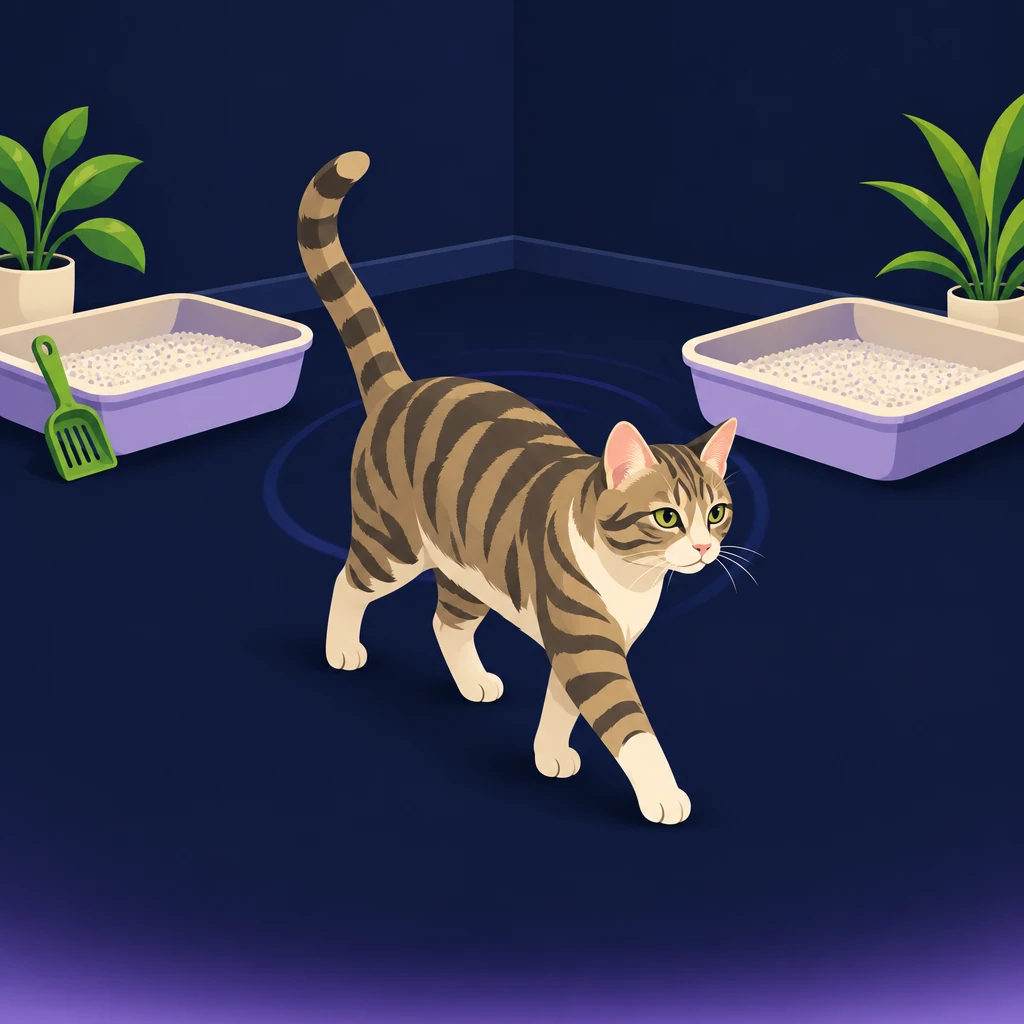
Litter is the least glamorous cat supply, and the one that matters most in a home with an indoor cat. Get these five things right.
International Cat Care says one per cat, plus at least one extra, in different quiet spots around the home.
Aim for about one and a half times your cat's length, nose to base of tail. Open trays are generally preferred: covered ones trap smells and can put cats off.
Somewhere quiet, away from food, water and busy areas of the home.
Cats prefer about 3cm of fine, sand-like litter, and many like clumping types.
Scoop at least once a day, and twice if you can. Wash the whole tray regularly: weekly for non-clumping litter, every two to four weeks for clumping.
The basics
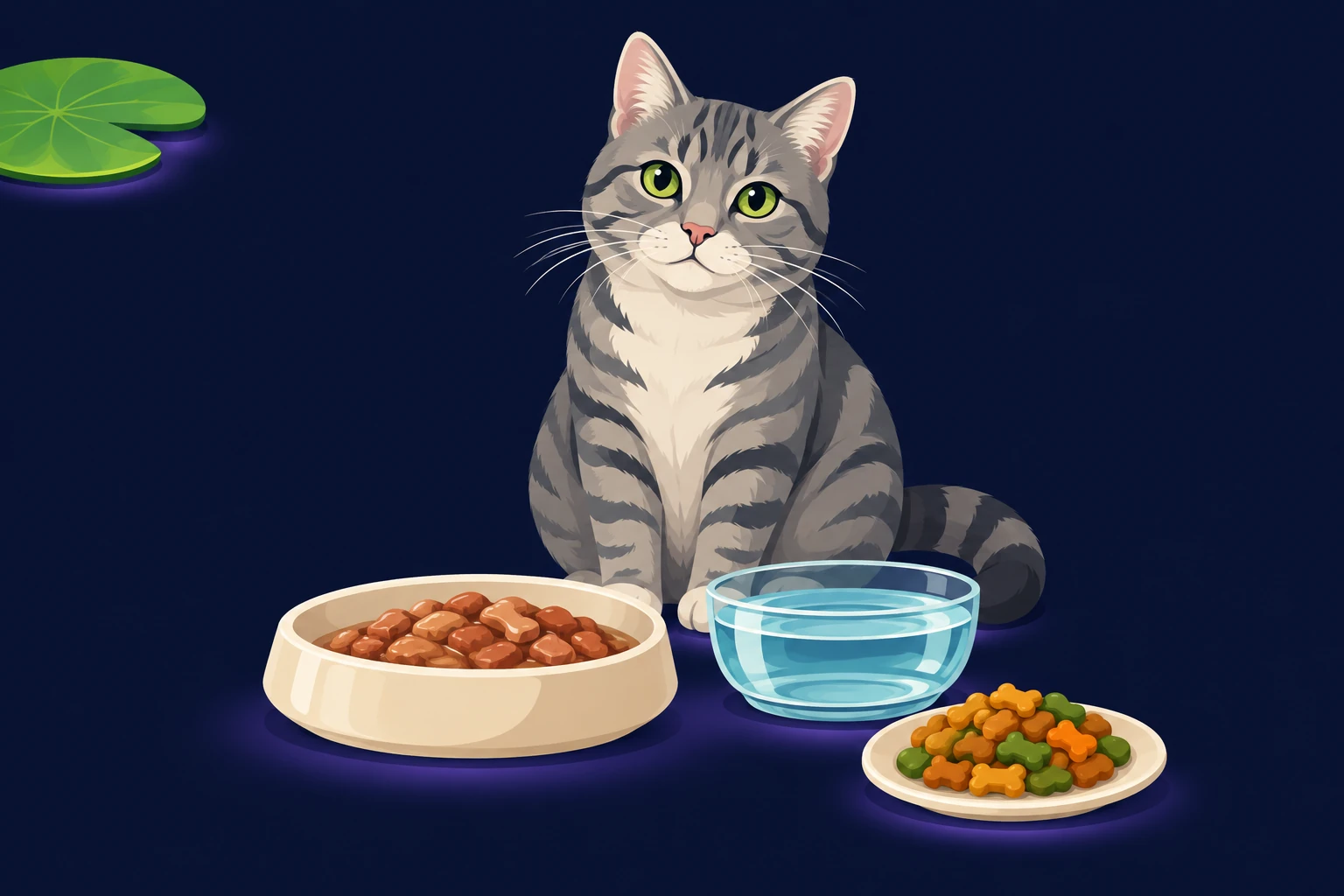
Cats are obligate carnivores, which means they need meat to stay healthy. Choose a cat food that says complete on the pack, then decide between wet, dry or both: that's down to your cat. Cats Protection suggests fresh wet food at least twice a day, or dry food at least once a day.
Water matters as much as food. Keep it well away from the food bowl, because cats don't like their water contaminated, and replace it at least once a day. Wide, shallow bowls give sensitive whiskers room.
Treats are fine in small amounts, but too many means extra weight. Stock changes, so call or pop in to see what's in. If we haven't got what you're after, ask. We can order it in, take your number and call you when it's here, or suggest something similar.
At a glance
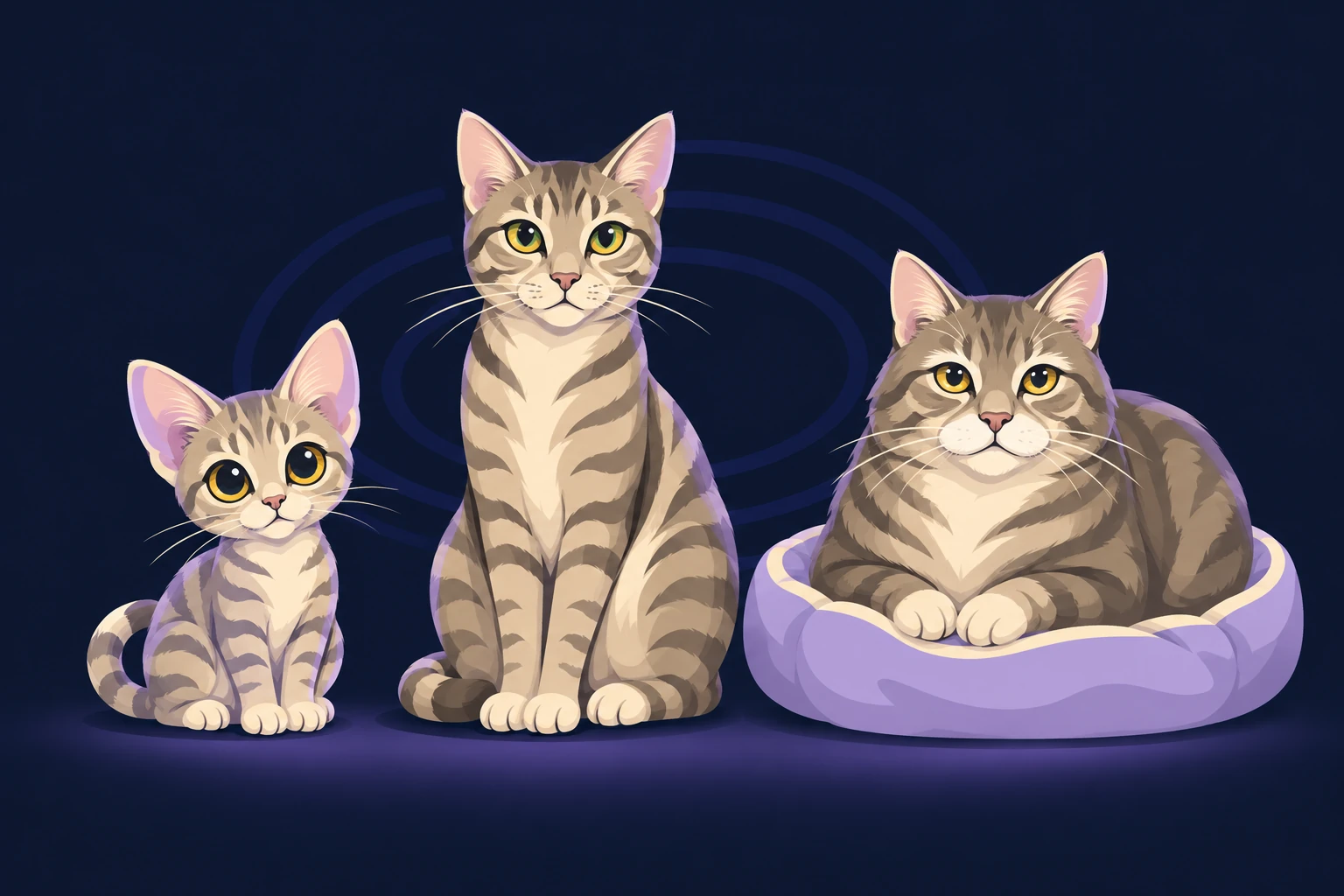
Each stage has different needs. Your vet can advise on your own cat.
| Stage | Food | Good to know |
|---|---|---|
| Kitten (up to one year) | Kitten food, in small amounts four times a day for the youngest | Vaccinations start at around eight to nine weeks, with a second dose at 12 weeks. Neutering is possible from around four months. |
| Adult | A complete adult food, wet, dry or both | In England, cats older than 20 weeks must be microchipped, with the details kept up to date. |
| Older cat | A senior food may help: fewer calories, more good-quality protein, four to six small meals a day | Low-sided trays and soft cat beds help. After seven or eight years, your vet may suggest a check-up twice a year. |
The range
Cats Protection says cats adopted as kittens, or who have always lived inside, usually adapt best, while cats used to the outdoors can find indoor life hard. The RSPCA adds that indoor cats need much more of your time and effort. Enrichment is where that effort goes.
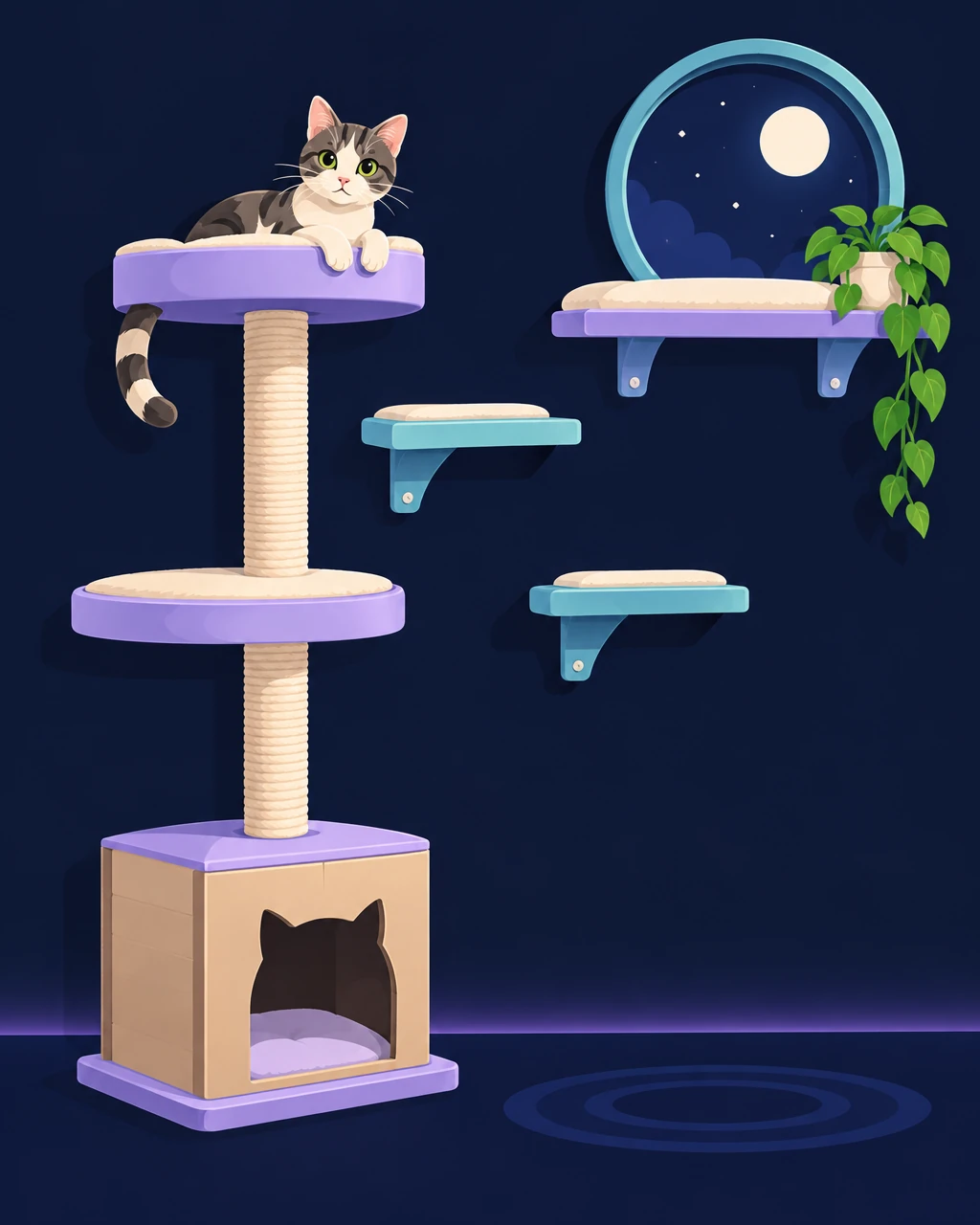
Shelves, cat trees and window perches, because cats feel safe resting and watching from high places.
Under the bed, in a cupboard or behind the sofa.
Tall and sturdy, in more than one spot.
Short games, several times a day.
They turn mealtimes into a bit of a hunt.
In a multi-cat home, each cat needs their own bowls, tray and bed, plus a spare, spaced out around the home.
The range
It's normal, not naughty: scratching keeps claws in condition and leaves scent. A post should be tall enough for a full stretch, with a heavy, stable base. Put it near where your cat already scratches or near their bed, and give each cat their own. A flat scratching pad suits cats who scratch carpet.
Younger cats will happily play ten times a day or more, older cats three or four times. Games of a minute or two count. Wand toys that mimic prey work well. Let your cat catch the toy now and then so they don't get frustrated.
Check toys often and replace worn ones. Never leave a cat alone with toys they could shred and swallow or get tangled in. Put away string, ribbon, thread, wool and tinsel after play: swallowed, they can cause serious gut problems that usually need surgery. And keep lilies out of the house. All parts, including pollen, are dangerous to cats, and lily poisoning is often fatal without fast treatment.
Worth a call
Cats hide illness well, so small changes matter. Ring your vet if your cat:
A cat who can't pass any urine is an emergency: call your vet straight away. Male cats are much more prone to this.
International Cat Care says one per cat, plus at least one extra, in different quiet spots away from food, water, full-length windows and busy thoroughfares. So two cats need three trays. Aim for a tray about one and a half times your cat's length, with roughly 3cm of fine litter.
Some cats live happily indoors, but it takes work. Cats Protection says cats who have always lived inside adapt best, while cats used to going out can find it hard. The RSPCA says indoor cats need much more of your time and effort, so plan for height, hiding places, scratching posts, daily play and puzzle feeders. Ask your vet if you're unsure.
Either, or both: it's down to your cat's preference, as long as the pack says complete. Cats Protection suggests fresh wet food at least twice a day, or dry food at least once a day, with fresh water always available and replaced daily. Keep the water away from the food bowl. Ask your vet if you have any health concerns.
Yes. PDSA says all parts of a lily plant are dangerous, including the leaves, flowers and pollen, even in very small amounts. A cat can be poisoned just by brushing past a lily and licking the pollen off its fur. Contact your vet immediately if you think your cat has eaten or licked any part of one, and don't wait for symptoms.
Cats Protection counts cats as senior from around 11. A senior food may help, and it suggests four to six small meals a day. Low-sided trays make it easier to climb in and out, and soft beds in warm, quiet spots help too. After about seven or eight years, your vet may recommend a check-up twice a year.
Keep exploring
How we can help
Tell us your cat's age, your home and how they spend their day, and have a chat with the team about litter, food, scratching and play. We're open seven days a week: Monday to Saturday, 9:30am to 5:30pm, and Sunday, 10:00am to 4:00pm, on Tut Hill at Fornham All Saints in Suffolk, just off the A14.