1970
the year TMC was founded

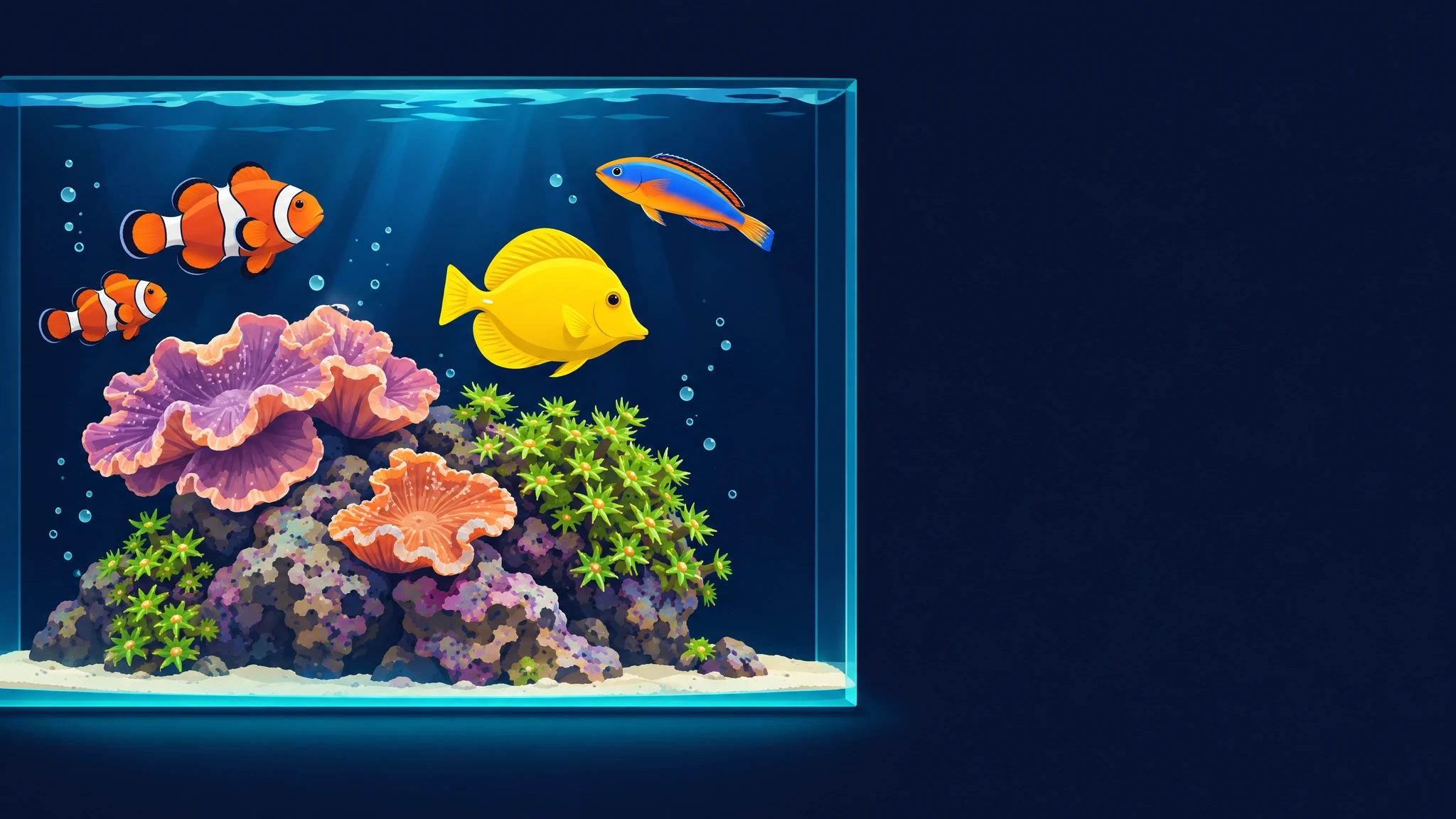
Reef-ready, ordered in from TMC
Looking for marine fish in Bury St Edmunds? We're an authorised TMC stockist and can order in fish, corals and invertebrates from TMC's range. Saltwater rewards patience: weeks of cycling, fish added a couple at a time, corals last.
Fornham All Saints, just off the A14 near Bury St Edmunds. Open seven days.
In the shop
All in the shop at Fornham All Saints, and we can order in from TMC's range. We also offer water testing in the shop. Ask the team when you call or visit.
We are an authorised TMC stockist, and our reef shelves carry Red Sea, Tropic Marin, D-D The Aquarium Solution and Seachem.







By the numbers
Tropical Marine Centre, known as TMC, is a marine livestock wholesaler. We are an authorised TMC stockist, and we can order in stock directly from TMC. Tank-bred and cultured stock sits alongside wild-caught, so there is plenty to talk through. It is a big range, but it is not any species at any time, and we cannot promise lead times, minimums or that a particular species will be available. What it does mean is that you are not limited to whatever is in the tanks on the day.
the year TMC was founded
species of marine fish, corals and invertebrates
countries TMC sources livestock from
The range
TMC's range covers fish, corals and invertebrates. Here are the groups, with examples from TMC's own listing. Stock changes, so call or pop in to see what's in. If we haven't got what you're after, we can order it in, take your number and call you when it's here, or suggest something similar.
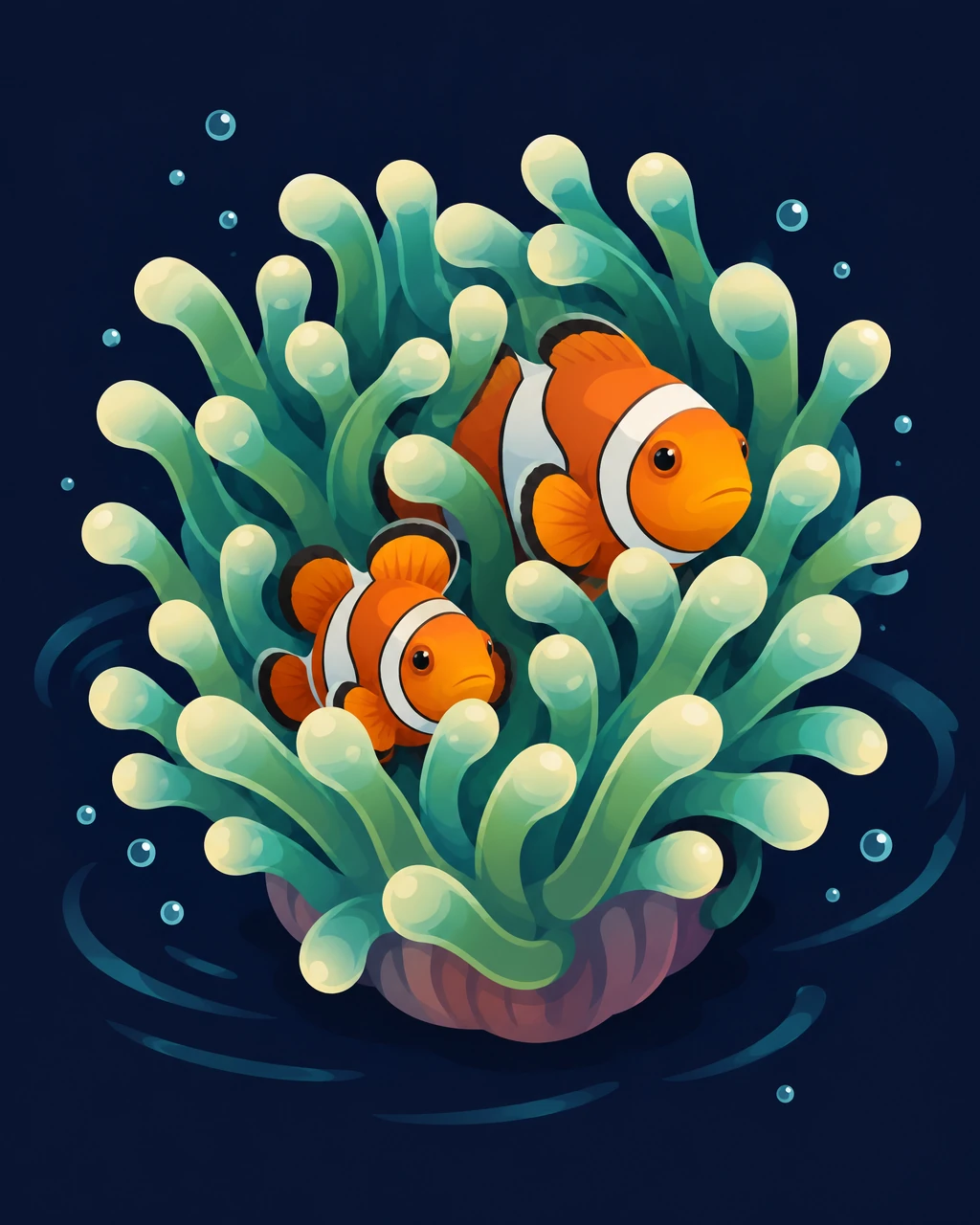
Clownfish are the classic first marine fish: hardy, often recommended to beginners and happy without an anemone. Tangs are active grazers that need long tanks with room to swim, and keeping several together rarely works. Some angelfish peck at anemones, so check compatibility before you choose.
Soft corals, mushroom corals and polyps are the usual first corals, because they forgive more than most. Hard corals split into LPS (large polyp stony) and SPS (small polyp stony). SPS are the least tolerant, wanting strong light, strong flow and pristine water.
Anemones are among the more demanding invertebrates and do best in a mature tank. Shrimp, starfish, clams and crabs each have their own needs, so ask how they fit with your fish and corals.
The basics
A few details make the conversation quick. Tell us:
We will talk through whether your choice suits your tank and what ordering it in involves. Availability changes, so call or pop in before you plan around a particular fish. Travelling from further afield? Ring first, so the trip is worth it.
At a glance
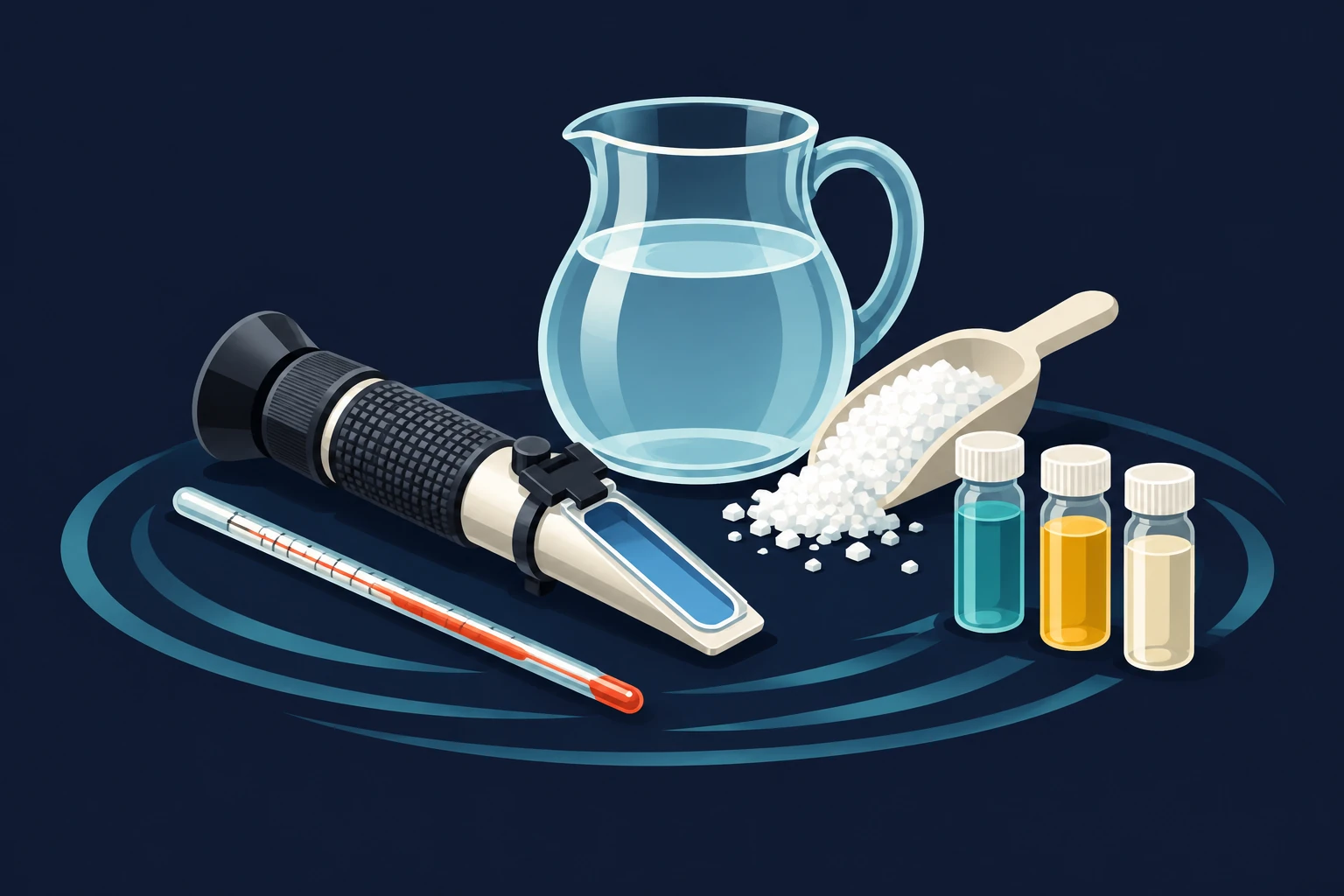
These are typical targets from hobby sources. Stability matters more than chasing exact numbers, so change things slowly.
| What to check | Typical target | Worth knowing |
|---|---|---|
| Salinity | About 35 parts per thousand, a specific gravity of roughly 1.025 to 1.026 | Measure with a refractometer made for seawater. Evaporation leaves salt behind, so top up with fresh water |
| Temperature | About 24 to 27°C | Keep a separate thermometer in the tank |
| Ammonia and nitrite | Zero before the first fish | Wait until readings settle at zero |
| Nitrate | Low and steady in a reef, not zero | Fish-only tanks tolerate a little more |
| Water changes | Roughly 10% weekly or 20% fortnightly | Mix salt in purified (RO/DI) water ahead of time |
| Test kits | Ammonia, nitrite, nitrate and pH to start with | Reef keepers add alkalinity, calcium, magnesium and phosphate as corals arrive |
Smaller tanks swing faster than large ones. A nano reef, typically 60cm or smaller, can work, but it leaves less room for error.
Step by step
Marine takes longer because each stage needs the one before it to settle.
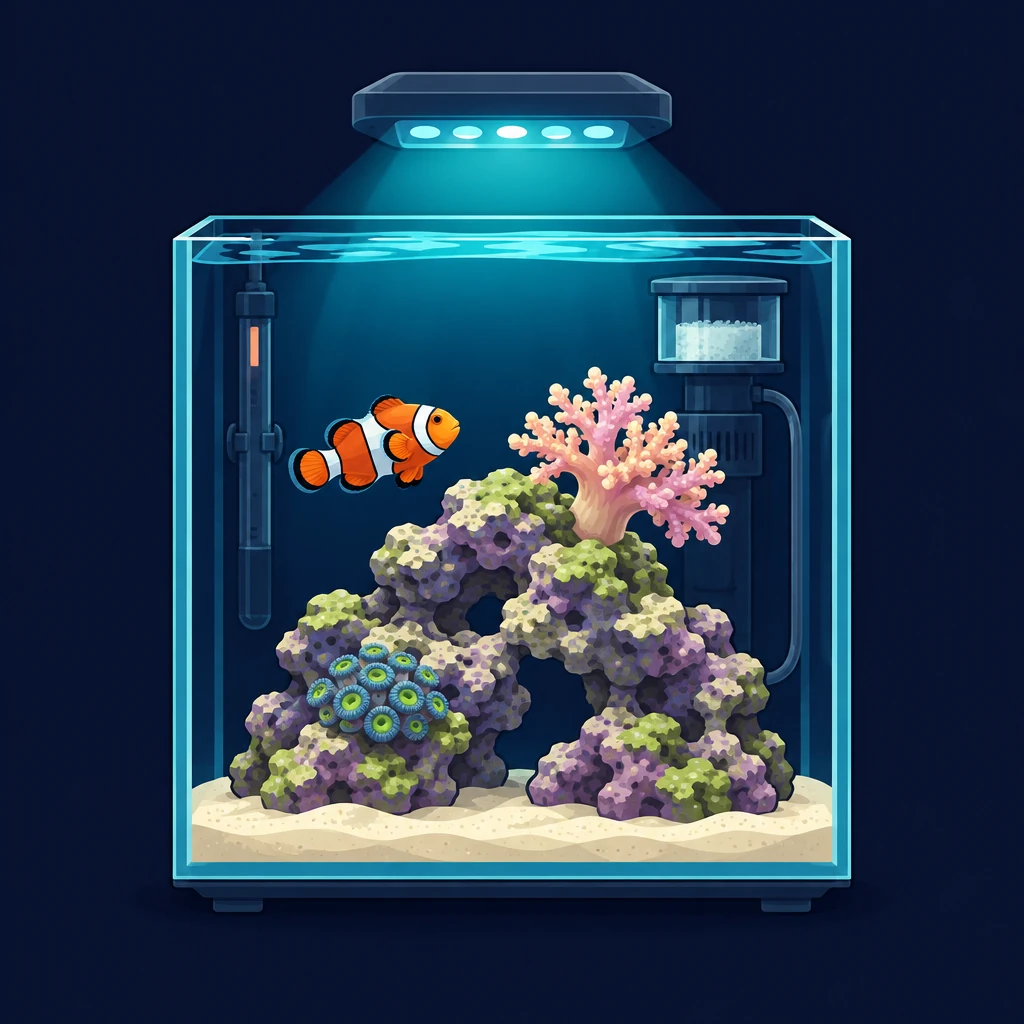
Bigger volumes are more stable. Decide on lighting and flow, and where you will mix and store salt water. Our aquariums and equipment page covers the general kit.
Mix marine salt to about 35 parts per thousand and add live rock or sand. Many reef keepers allow at least four weeks before the first fish.
Only then think about fish.
Two or three at a time, at least two weeks apart, starting with hardy fish such as clownfish.
If this is your first tank, wait until the water has proved steady. Soft corals, mushrooms and polyps come first, LPS later and SPS last. Lighting matters more once corals arrive, so ask us what suits the ones you want.
They prefer a mature system, so give the tank time before adding one.
Good to know
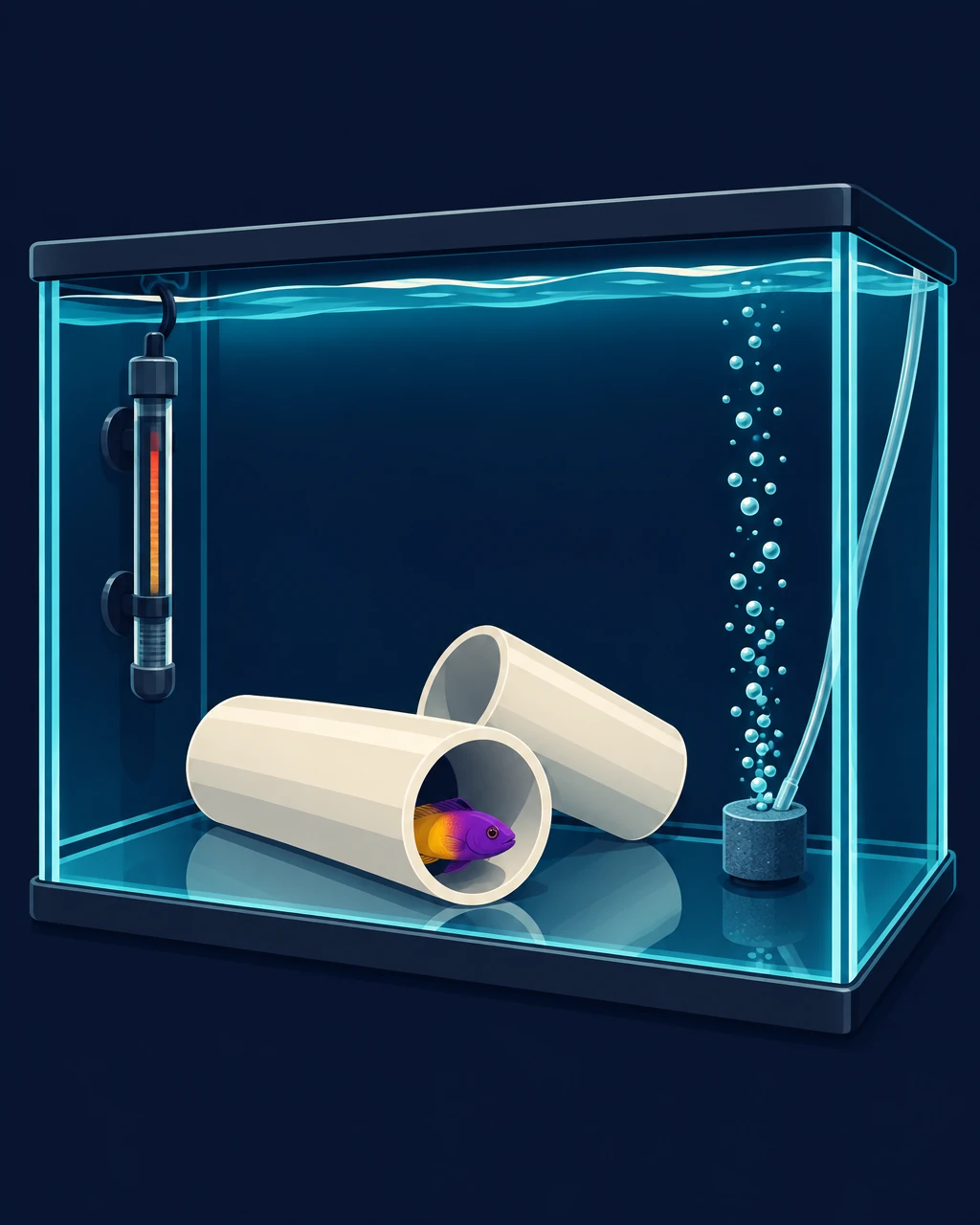
New fish can carry problems into a display tank. Many reef keepers quarantine new fish for around three to four weeks in a separate tank, and restart the clock if anything shows signs of illness. A simple quarantine tank has a cover, aeration, a heater, a biofilter and inert hiding places such as lengths of PVC pipe.
Keep corals, anemones and other invertebrates well away from copper treatments. Most invertebrates are highly sensitive to copper and will not survive it. If a fish looks unwell, speak to a vet or fish health specialist before you treat anything.
Worth a call
A marine tank asks for more than a freshwater one: weeks of cycling, fish added in twos and threes, a quarantine routine, regular water changes and testing, and corals only once the water is steady. Done patiently, it is one of the most rewarding tanks there is. Rushed, it is a costly way to learn.
If you are weighing it up, a well-run freshwater tank is a lovely thing; see our tropical fish page. If a garden pond is closer to your plans, start with koi and coldwater fish. Whatever you choose, ask us first. We would rather you got it right.
We are an authorised TMC stockist and can order in from TMC's range, which covers fish, corals and invertebrates. Tell us what you would like and what tank it is going into. We cannot promise lead times, minimums or that a particular species will be available, so call or pop in and we will talk it through.
Many reef keepers allow at least four weeks after setting up, and the real test is ammonia and nitrite reading zero. After that, add two or three fish at a time, at least two weeks apart. Corals wait longer, until the water has proved it is steady. Rushing is the classic marine mistake.
Most reef keepers aim for around 35 parts per thousand, a specific gravity of roughly 1.025 to 1.026, at about 24 to 27°C. Stability matters more than chasing exact numbers. Salinity creeps up as water evaporates, so top up with fresh water rather than salt water, and check it with a refractometer.
Clownfish are often recommended for beginners: they are hardy, and common clownfish do not need an anemone. A new pair can squabble while they settle in. One care guide gives 60cm as the absolute minimum tank length, with 90cm better. Tell us your tank size and we will talk through what suits.
Soft corals are the usual starting point. Leathers, mushrooms, zoanthids and polyps tolerate water swings better than stony corals and need less light. LPS are a step up, and SPS suit experienced keepers with pristine, stable water. Wait until your tank has proved itself before adding any coral, and tell us about your lighting so we can talk through what will suit it.
Keep exploring
How we can help
Call 01284 703418 or pop in to talk through your tank, or to ask what we can order in from TMC's range. We are open seven days a week at Tut Hill, Fornham All Saints, just off the A14, and it helps to ring before a special trip. Find opening hours and directions, or read more answers on our FAQ page.