Rabbits
Highly social: at least a pair, ideally a neutered male and a neutered female. Typically 8 to 12 years.
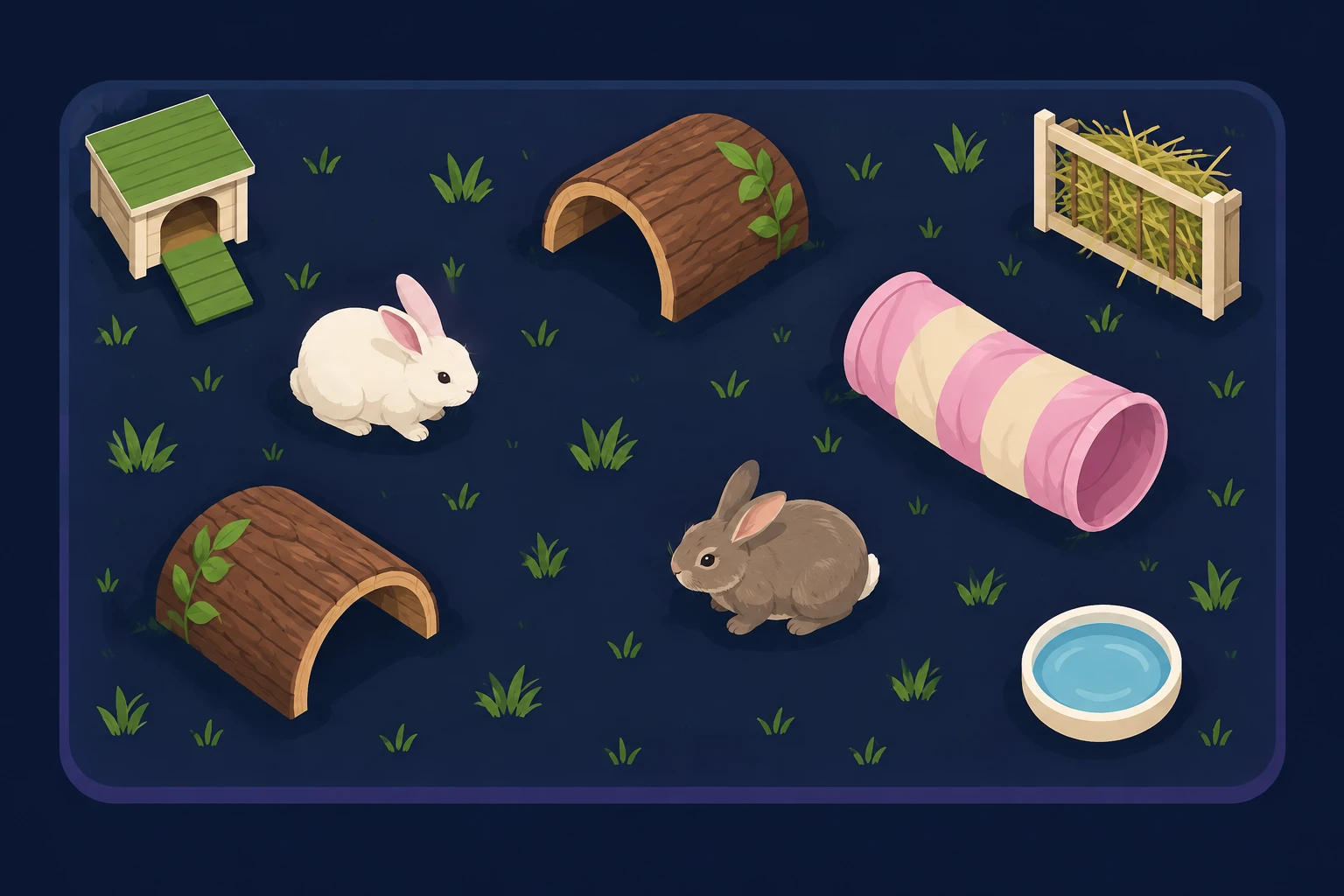
Rabbits, guinea pigs and friends
Supplies and straight advice for rabbits, guinea pigs and other small animals, at our independent pet shop near Bury St Edmunds. They need more room and more company than most people expect, so ask us before you buy.
Fornham All Saints, just off the A14 near Bury St Edmunds. Open seven days.
In the shop
All in the shop at Fornham All Saints, with the team on hand to talk through company, housing and food first.
Our small animal food and hay includes Burgess, Science Selective, Little One and Marriages.




The range
At our small animal shop in Bury St Edmunds, the first question we'd like you to ask is who will keep this animal company. Most small animals need more of their own kind than people expect. We keep rabbits, guinea pigs, hamsters, gerbils, rats, mice, degus and chinchillas. These are general rules, so ask us about the animal you have in mind.
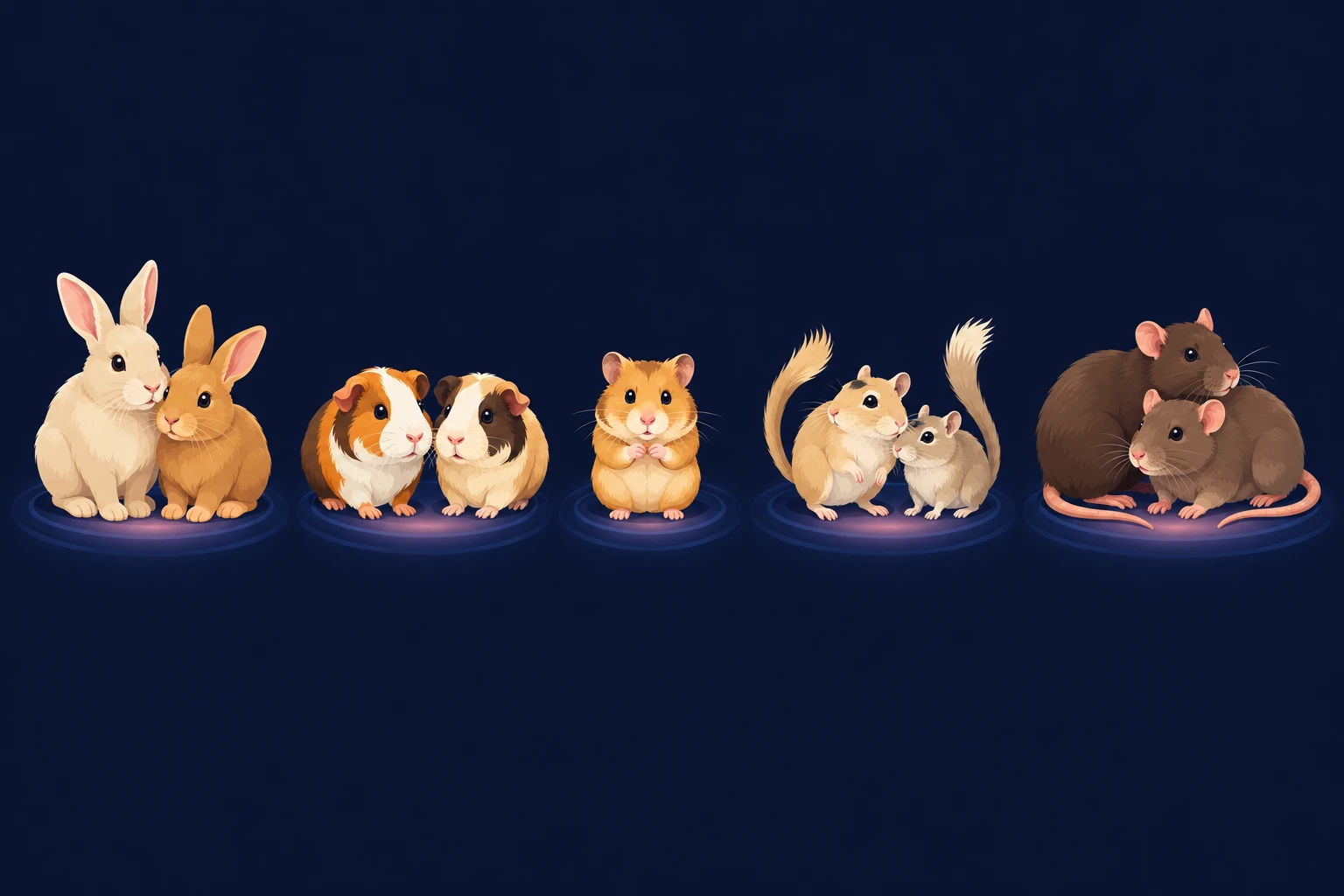
Highly social: at least a pair, ideally a neutered male and a neutered female. Typically 8 to 12 years.
Happiest in pairs or groups, and shouldn't live alone. Typically 4 to 8 years.
Better kept alone. Dwarf hamsters can sometimes live together with the right care. Usually up to two years.
Never alone: same-sex pairs or groups, formed early. Up to three or four years.
Sociable: pairs or small same-sex groups. They can become depressed on their own.
Never alone unless a vet says so. Keep compatible single-sex groups.
Both are sociable, so keep them in pairs or small groups. Their housing and diet differ from rabbits and guinea pigs, so ask us what they need before you buy.
By the numbers
the smallest living space the RSPCA recommends for two medium-sized rabbits
of UK pet rabbits lived on their own in 2024 (PDSA PAW Report)
the share of a rabbit's diet that should be fresh hay and grass (RSPCA)
how long a rabbit can typically live, and sometimes longer (RSPCA)
The range
The RSPCA suggests 85% fresh hay and grass, 10% leafy greens and 5% pellets. In practice that's a bundle of good hay every day as big as the rabbit, a large handful of washed greens, herbs and weeds, and about 25g of pellets (roughly an egg cupful) for each kilogram of body weight. Muesli-style mixes aren't recommended, because rabbits pick out the tasty bits and leave the rest.
Guinea pig food starts with hay, which makes up most of the diet (PDSA says 80 to 90%) and should always be available. Guinea pigs can't make their own vitamin C, so they need daily vegetables and a fresh portion of pellets to provide it. Parsley, celery, peppers, cucumber and gem or romaine lettuce are safe everyday choices. Broccoli, spinach, kale, carrot and apple are for treats.
Teeth grow constantly, and chewing hay wears them down. Fresh water should always be available. Ask us about food and bedding: stock changes, so call or pop in to see what's in. If we haven't got what you're after, ask. We can order it in, take your number and call you when it's here, or suggest something similar.
Step by step
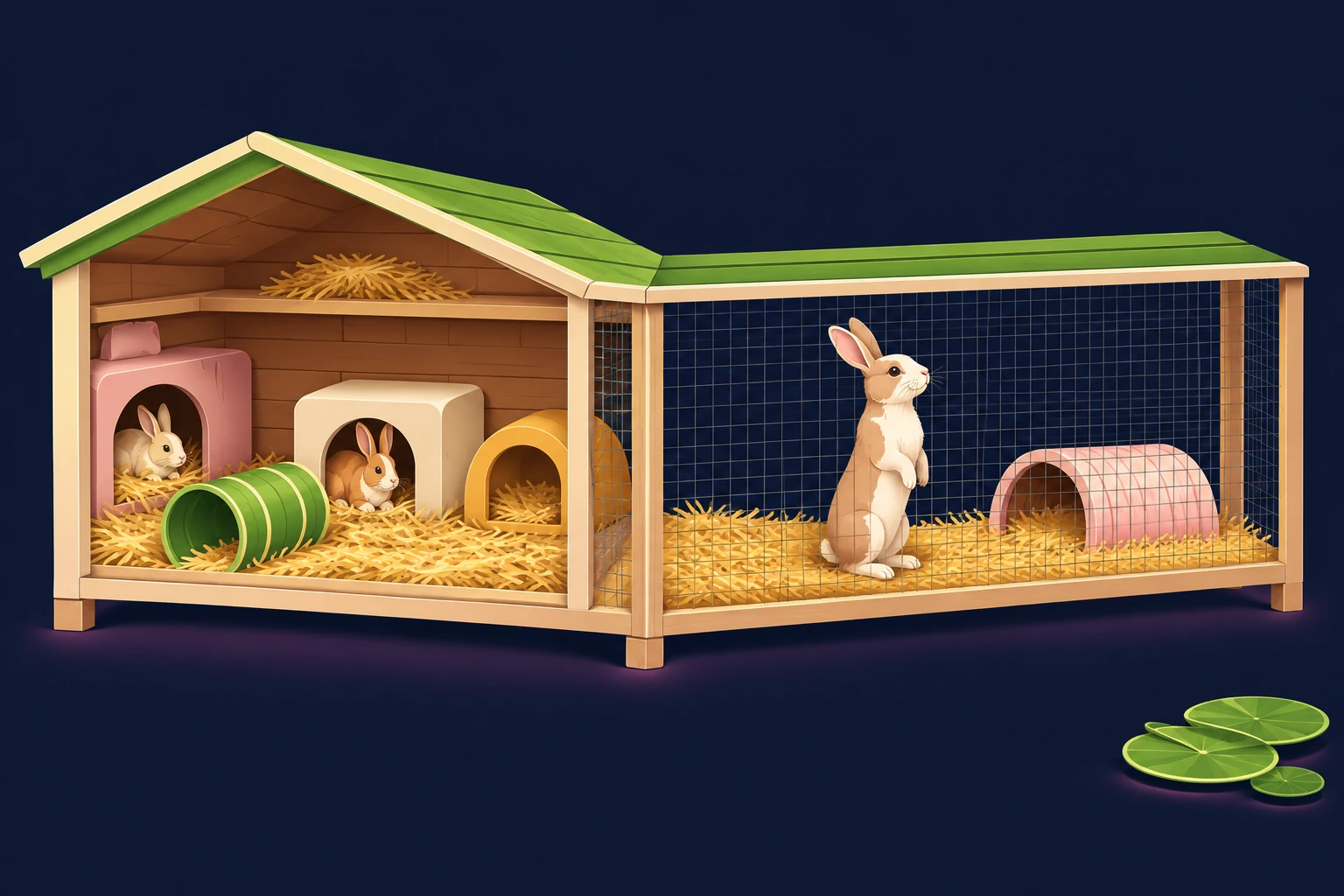
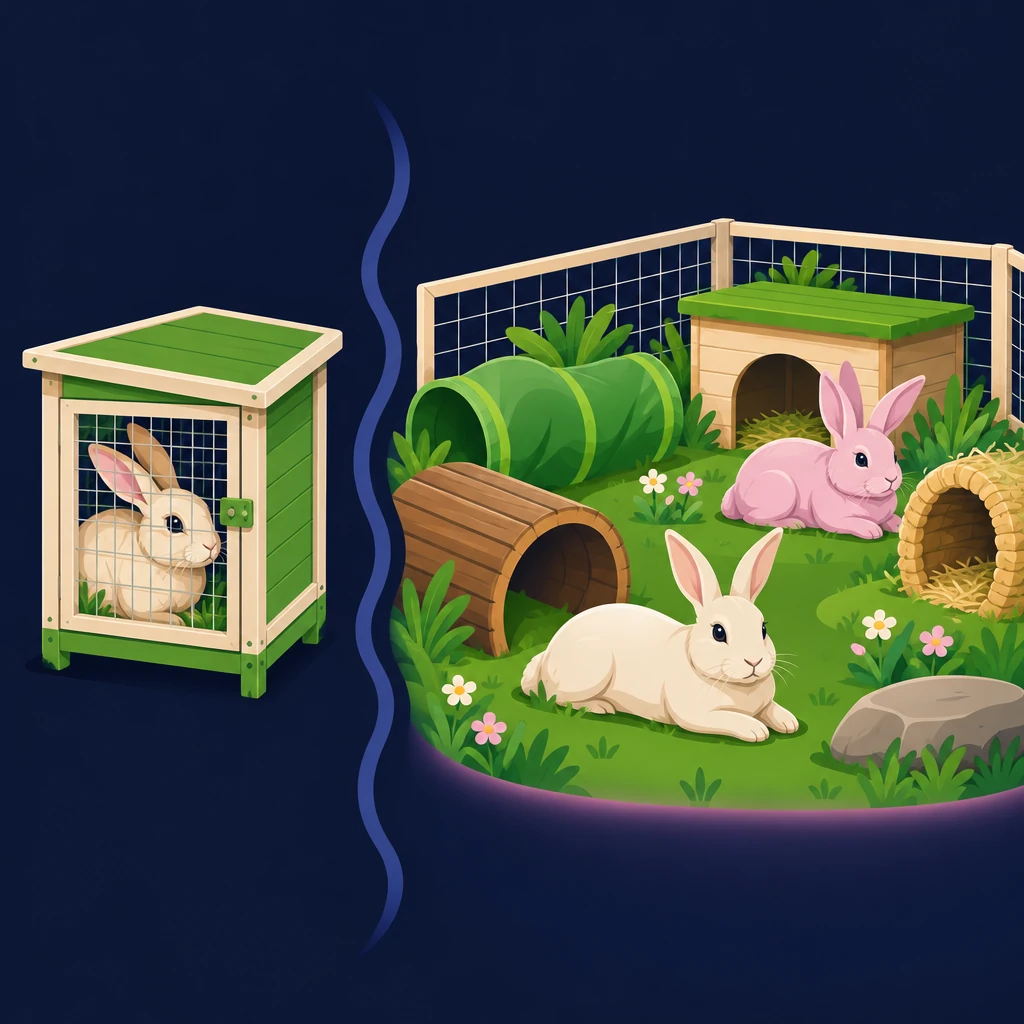
The RSPCA says rabbit hutches on their own aren't large enough. For guinea pigs, PDSA suggests a hutch of at least 1.5m x 1m with a 2m x 1m run attached, and says bigger is better.
Rabbits need constant access to an exercise area, permanently attached to their shelter.
One for each animal, plus a spare.
For rabbits: dust-free straw, hay or shredded paper, with newspaper or dust-free, non-cedar shavings underneath. For guinea pigs: dry, dust-free wood shavings and hay, on a solid floor, because grid floors can hurt their feet.
The RSPCA gives 10 to 20°C as ideal for rabbits and warns that guinea pigs can get heatstroke above 26°C.
The basics
Rabbits need room to run, hop, jump, dig and stretch up to full height. Guinea pigs are active for up to 20 hours a day and only sleep in short spells, so they love pipes and shelters to explore.
Being picked up can be frightening for a prey animal. Never lift a rabbit by its ears or scruff. Handle young rabbits gently every day so they learn that people are friends. For a guinea pig, use both hands, one across the shoulders and one under the hindquarters, and hold them close to the ground in case they jump. Hamsters and gerbils are easily injured by rough or careless handling, and children should always be supervised.
At a glance
| The mistake | What to do instead |
|---|---|
| One rabbit or guinea pig on its own | Keep at least a pair. |
| A hutch as the only home | Treat the hutch as the bedroom, and add a permanently attached run. |
| Muesli-style food | Hay first, a handful of greens and a measured portion of pellets. |
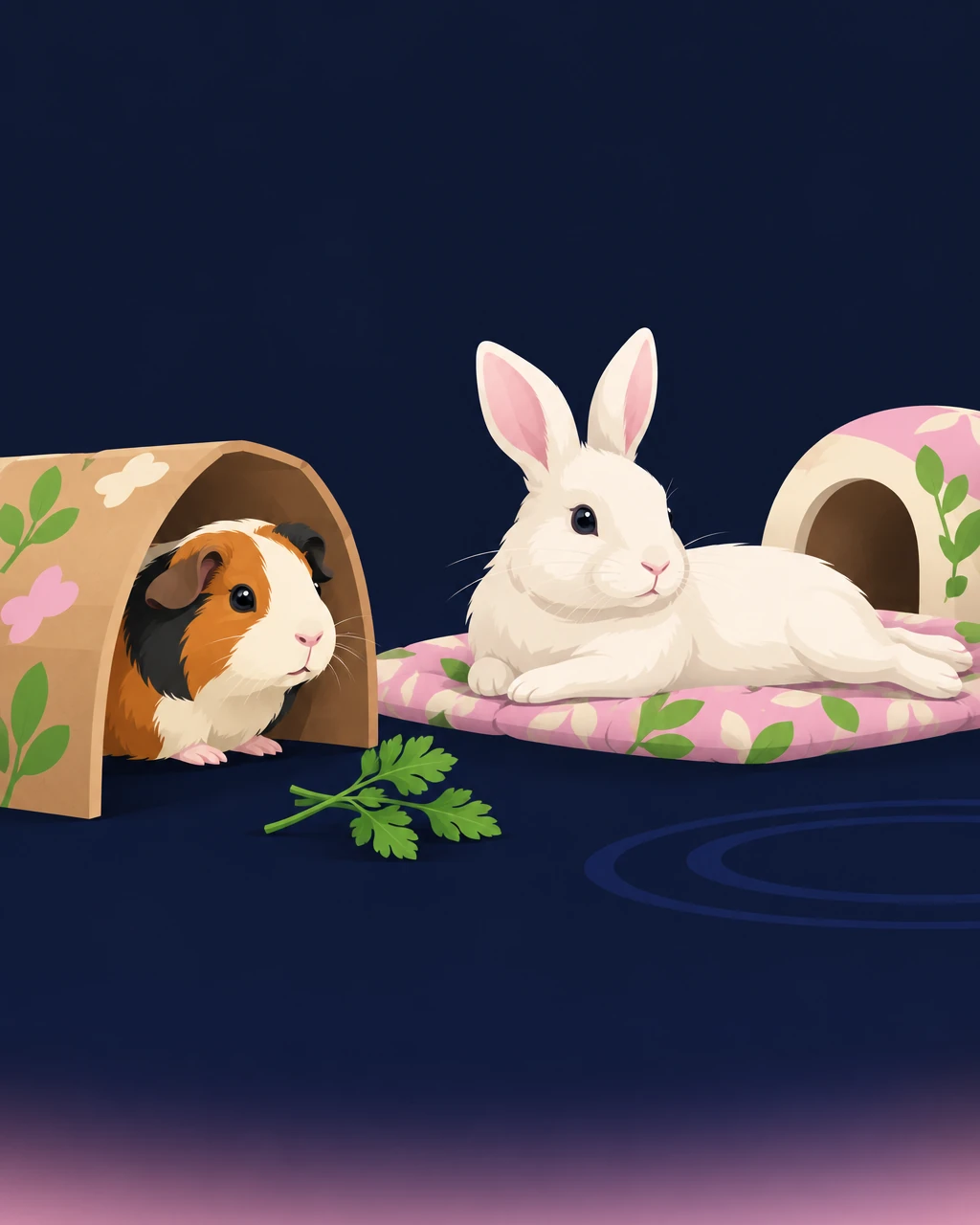
| Rabbits and guinea pigs together | Keep rabbits with rabbits and guinea pigs with guinea pigs. Rabbits can carry bacteria that harm guinea pigs. |
| Wire or grid floors | A solid floor with deep, dry bedding. |
| Pairing up Syrian hamsters | Keep Syrian and Chinese hamsters on their own. |
No. The RSPCA says rabbits and guinea pigs don't make ideal companions, and that rabbits are best kept with rabbits and guinea pigs with guinea pigs. The British Veterinary Association agrees, and the RSPCA notes that rabbits can carry bacteria that are dangerous to guinea pigs. If one of yours is on its own, ask us or your vet about a suitable companion.
Yes. The RSPCA says guinea pigs lack the enzyme needed to make vitamin C and can only store it for short periods, so they need it every day. PDSA warns that without it they can get scurvy. Fresh vegetables help, and pellets provide it too, but vitamin C breaks down over time, so a fresh portion of pellets matters.
PDSA suggests a hutch of at least 1.5m x 1m with a 2m x 1m run attached, and says the bigger the better. The RSPCA adds that guinea pigs need a space high enough to stand up on their back legs, and ideally free access to an exercise area with pipes and shelters. Provide one more hide than you have guinea pigs.
For rabbits, the RSPCA suggests dust-free straw, dust-free hay or shredded paper, with newspaper or dust-free, non-cedar wood shavings underneath. For guinea pigs it suggests dry, dust-free, absorbent wood shavings with hay on top, on a solid floor, because grid floors can hurt their feet. In hamster cages, skip fluffy cotton-wool bedding, which can tangle and cut off circulation, and avoid wire mesh floors.
The RSPCA says a rabbit can typically live for 8 to 12 years, and some live longer. PDSA and Blue Cross put guinea pigs at around four to eight years. The RSPCA says hamsters usually live up to two years and gerbils up to three or four. Whoever brings one home is taking on a long-term job, so plan the daily care for the whole household.
We keep rabbits, guinea pigs, hamsters, gerbils, rats, mice, degus and chinchillas. Stock changes, so call 01284 703418 or pop in to ask what's in. We're open seven days a week. Whichever you're thinking about, come with a rough idea of the space you have and who will care for them, and we'll talk through what they need, including company.
Keep exploring
How we can help
Tell us which animals you're thinking about and how much space you have, and have a chat with the team about company, housing, food and rabbit supplies. We'd rather you got it right. We're open seven days a week: Monday to Saturday, 9:30am to 5:30pm, and Sunday, 10:00am to 4:00pm, on Tut Hill at Fornham All Saints in Suffolk, just off the A14.