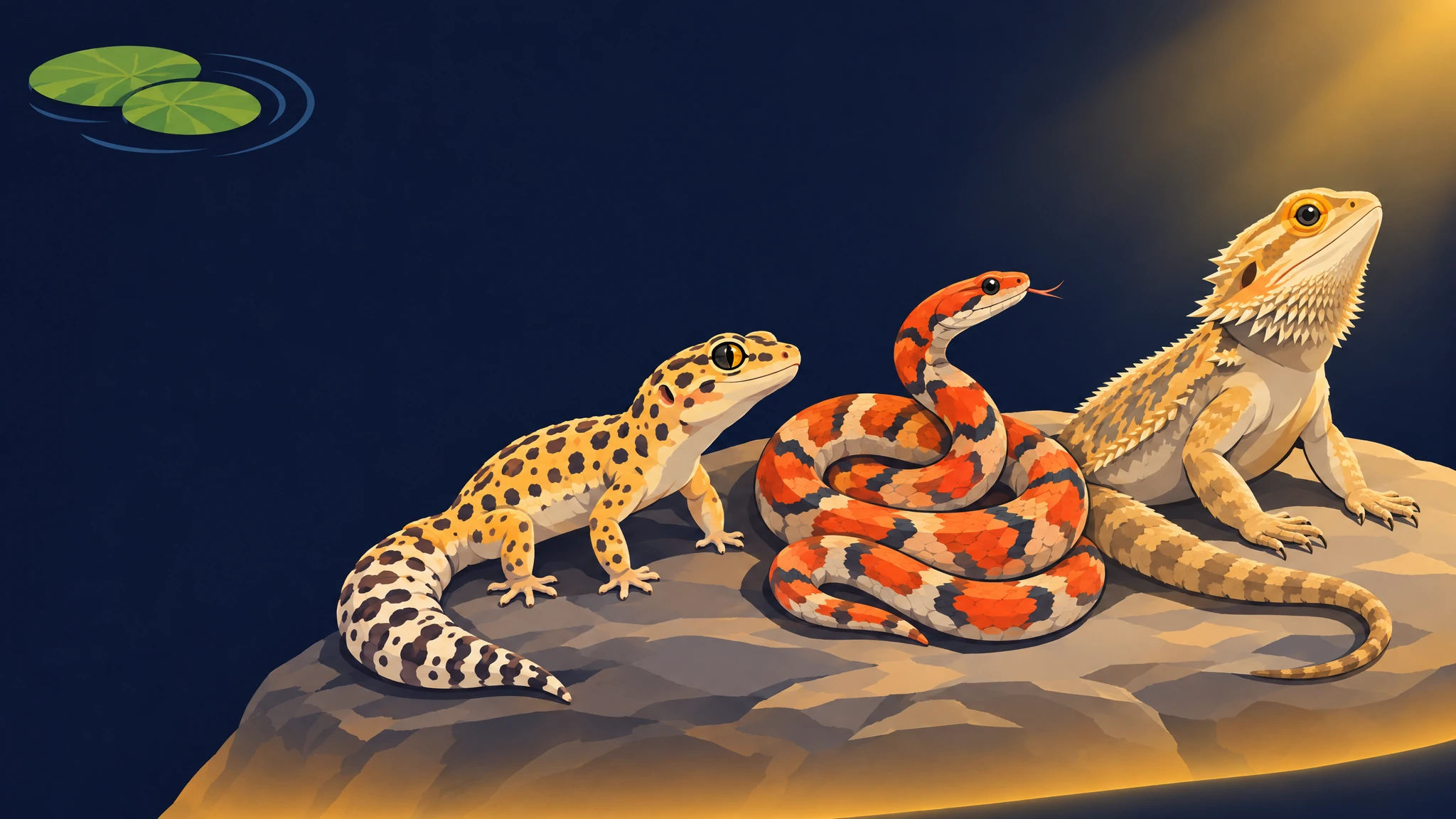






Leopard gecko, corn snake and bearded dragon basking together in warm golden light
Shop by pet / Reptiles

Heat, light and space

Reptile shop in Bury St Edmunds

Exotic reptiles at our independent pet shop near Bury St Edmunds, with straight advice on heat, light and space before you buy. Get the warm end of the vivarium right first, then the light, then the space.

Fornham All Saints, just off the A14 near Bury St Edmunds. Open seven days.

In the shop

What we stock for reptiles

Bearded dragonsLeopard and crested geckosRoyal pythonsCorn snakesKingsnakes and milk snakesTortoisesChameleons and skinksFrogs and axolotlsTarantulas, vampire crabs and other invertsVivariumsReptile heating and UVBLivefoodFrozen reptile food

All in the shop at Fornham All Saints, with the team on hand to talk through the set-up first.

Brands we stock

Our reptile shelves carry Exo Terra, Arcadia, ProRep, Komodo, Zoo Med and Habistat.

  • Exo Terra logo
  • Zoo Med logo
  • Komodo logo
  • PROREP logo
  • HabiStat logo

The basics

Buy the vivarium first, the reptile second

At our reptile shop in Bury St Edmunds, advice starts with the vivarium. Set it up, switch it on and watch the temperatures for at least a week. The RSPCA says the same: run the enclosure for a week or more, with temperatures held steady for at least three days, before any reptile comes home.

It feels back to front, and it saves the most trouble. Heat, light and space are where reptile problems usually begin.

Light matters as much as heat: a reptile needs the right UVB, in the right place, for the right number of hours.

Stock changes, so call or pop in to see what's in. If we haven't got what you're after, ask. We can order it in, take your number and call you when it's here, or suggest something similar.

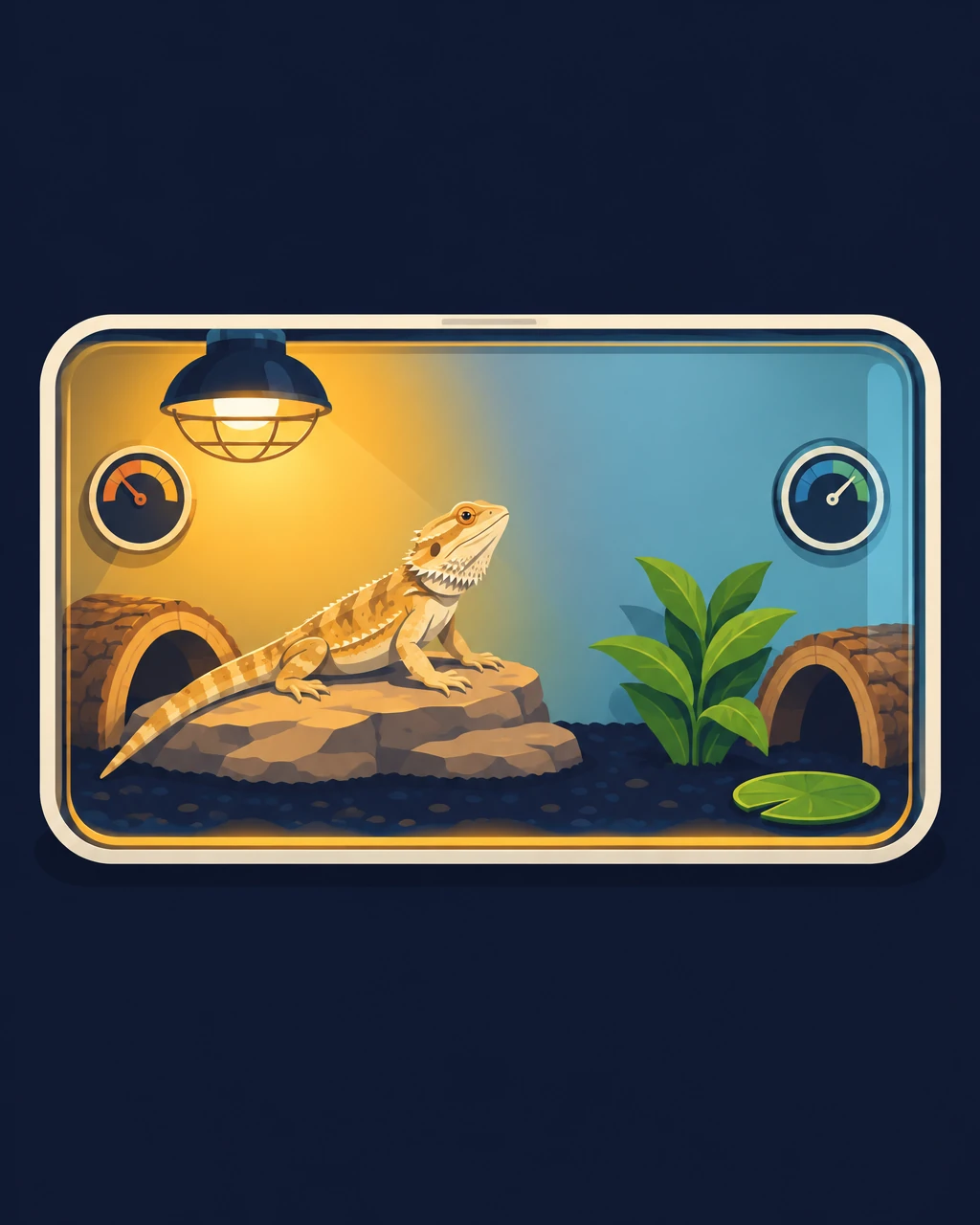
Cutaway vivarium with a warm basking end, a cooler end, two hides and a bearded dragon
Domed heat lamp with a wire guard casting a warm gold cone onto a basking rock

Step by step

The three fundamentals: heat, light and space

The figures below come from RSPCA care guides. They differ by species, so check yours before you buy.

Step 1

Heat: a gradient, not one temperature

A reptile warms up and cools down by moving around, so its home needs a warm end and a cool end. A leopard gecko's warm end sits at 28 to 30°C and its cool end at 24 to 26°C. A bearded dragon's basking spot is far hotter, at 38 to 42°C, with a cool end of 22 to 26°C. Every heat source needs a thermostat, whether it's a lamp, a ceramic heater or a heat mat, plus a guard so nothing can burn the animal. Thermostats aren't always accurate, so check a digital thermometer at each end every day.

Step 2

Light: UVB for the species that need it

The RSPCA recommends UVB tubes for leopard geckos, bearded dragons, corn snakes and royal pythons, at different strengths: high output (10 to 12% UVB) for a bearded dragon, 2 to 5% for a leopard gecko. Run lights on a plug-in timer, 12 hours on and 12 off, guard every lamp, and replace tubes when the manufacturer says to.

Step 3

Space: buy for the adult

For one adult bearded dragon the RSPCA's minimum is a vivarium 120cm long, 60cm high and 60cm deep. For a leopard gecko it's 60cm long, 40cm high and 30cm deep. Humidity matters too: around 30 to 40% for both of those, and 50 to 60% for a royal python. Add a hide at each end so the animal can shelter wherever it is on the gradient.

The range

Beginner reptiles, by group

These are the groups people most often start with, with examples. They're not a list of what's in the shop this week.

01

Geckos

Leopard geckos are the classic first choice: about 25cm long, insect-eating, and able to live for up to 20 years.

02

Bearded dragons

Around 45cm including the tail. They eat insects and leafy greens, and need strong UVB and a hot basking spot.

03

Corn snakes

Slim snakes that grow to around 150cm and eat defrosted mice, every seven to 14 days once adult.

04

Royal pythons

Also known as ball pythons. Around 150cm, they can live for more than 20 years and want a more humid home.

05

Other reptiles, amphibians and inverts

Kingsnakes, milk snakes, tortoises, chameleons, skinks, frogs, axolotls, tarantulas and vampire crabs each have their own rules, so never assume.

Not sure a reptile is right for you? Compare what small animals, birds and tropical fish ask of you first.

At a glance

How big they get and how long they live

The RSPCA says reptiles can live longer than you might expect. Here's what that looks like.

ReptileAdult sizeLifespanSmallest home
Leopard geckoaround 25cmup to 20 years60cm long
Bearded dragonaround 45cm with tail10 to 15 years or more120cm long
Corn snakearound 150cmaround 10 to 15 yearsas long as the snake
Royal pythonaround 150cmmore than 20 yearsas long as the snake

These are RSPCA figures, and the home sizes are minimums for one adult. Bigger is better, and individual animals vary.

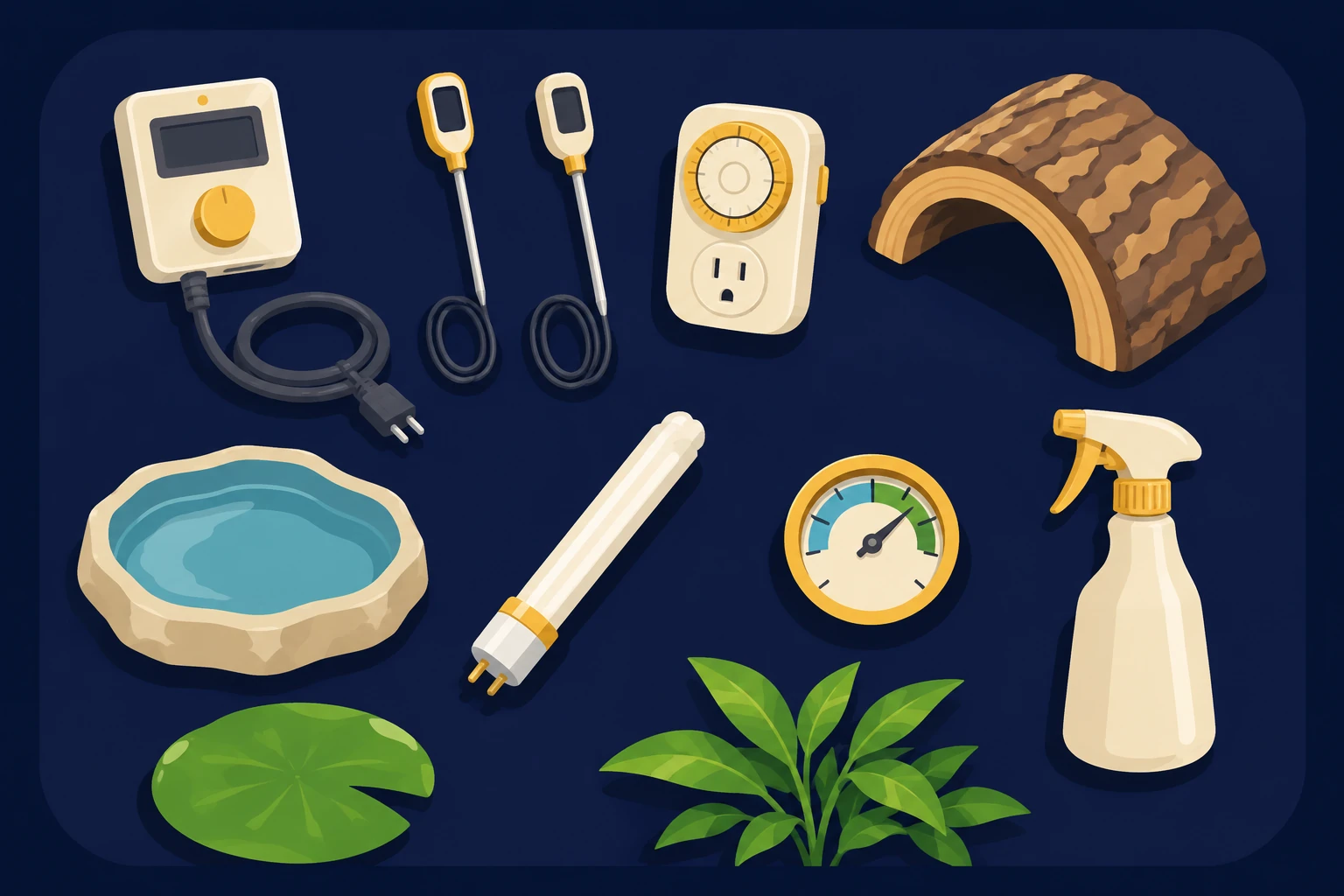
Vivarium kit laid out neatly: thermostat, thermometers, timer, hide, water bowl and UVB tube

Good to know

Vivarium checklist

Ask us about the reptile supplies your set-up needs. Stock changes, so call or pop in to see what's in.

Before any reptile comes home, you should be able to tick off every line:

✓A vivarium sized for the adult, with a secure lid
✓A thermostat on every heat source, and a guard around each one
✓A UVB tube of the right strength, on a timer
✓A digital thermometer at each end, plus a hygrometer
✓At least two hides, one at each end, and a humid hide for a leopard gecko
✓A substrate that suits the species (some loose materials are risky, so ask)
✓A shallow water bowl, kept fresh
✓A reptile-safe disinfectant: spot clean waste straight away and clean the whole vivarium monthly
✓A feeding plan, including supplements, sorted before day one
✓A vet who treats reptiles, found before you need one

In practice

Feeding, handling and welfare

01

Feeding

Leopard geckos eat live insects dusted with a vitamin and calcium supplement: daily when young, every other day as adults. Bearded dragons eat insects and leafy greens, once a day as adults. Corn snakes and royal pythons eat defrosted rodents, a young snake every five or six days and an adult every seven to 14 days.

02

Handling

Leave a new reptile alone for its first week where you can. After that, keep sessions to around 10 to 15 minutes and support the whole body. Never apply pressure to a gecko's tail, and wait 48 hours after a snake has eaten. Wash your hands before and after handling a reptile or its equipment, because reptiles can carry germs such as salmonella.

03

Welfare

Look at your reptile every day, and see a reptile vet if anything worries you. Under the Animal Welfare Act 2006, every keeper has a legal duty of care.

Worth a call

What we'll ask before you take a reptile home

Thinking about a reptile? Ask us before you buy. We'd rather you got it right. Expect a few questions:

✓Where will the vivarium go, and how big can it be?
✓Can you keep it warm and lit every day, and who looks after it when you're away?
✓Are you ready for 10, 15 or even 20 years?
✓Is there a dog, a cat or a small child in the house, and is the lid secure?
✓Is there a vet near you who sees reptiles?

Bring the measurements of the space you have in mind, and have a chat with the team.

Before you visit

Reptiles, your questions answered

See all our questions ↗
Which reptile is best for a first-time keeper?+

There isn't one best reptile. Leopard geckos, corn snakes and bearded dragons are popular starting points because their needs are well documented, but each still needs the right heat, light and space, and each can live for 10 years or more. Tell us about your home and your routine, and we'll talk through what suits you.

Why does every heat source need a thermostat?+

A thermostat regulates the temperature, so the heat can't keep climbing. The RSPCA says one must be used with all heat sources, and that each source needs a guard so the animal can't be burnt. Thermostats aren't always accurate, so check a digital thermometer at the warm and cool ends every day.

How strong does UVB need to be?+

It depends on the species, so check before you buy a tube. The RSPCA suggests a high-output tube (10 to 12% UVB) for a bearded dragon, 2 to 5% for a leopard gecko, and a low-output 2 to 7% tube for corn snakes and royal pythons. Put it on a timer, guard it, and replace it when the manufacturer says to.

How often do snakes eat, and when can I handle them?+

For a young corn snake or royal python, the RSPCA suggests a defrosted rodent every five or six days, and every seven to 14 days for an adult. Wait 48 hours after a meal before handling, keep sessions to around 10 to 15 minutes, and wash your hands before and after.

Which reptiles do you have in at the moment?+

Stock changes, so the best way to find out is to call 01284 703418 or pop in. We're open seven days a week. If you're weighing up a species, come with your questions and the measurements of the space you have in mind, and we'll talk through what it would need.

How we can help

Reptile shop in Bury St Edmunds: come and see what's in

Pop in any day. We're open seven days a week: Monday to Saturday, 9:30am to 5:30pm, and Sunday, 10:00am to 4:00pm. You'll find us on Tut Hill at Fornham All Saints in Suffolk, just off the A14 and typically about six minutes from Bury St Edmunds town centre.

Call 01284 703418↗

Open seven days, just off the A14 at Fornham All Saints.

Get directions ↗