Non-stick pans
Teflon (PTFE) and other non-stick coatings release toxic fumes when heated, which can cause sudden death in birds.

Budgies, finches, canaries and cockatiels
Budgies, zebra finches, canaries and cockatiels, and the supplies to keep them well, at our independent pet shop near Bury St Edmunds. They're flock birds that need company and room to fly, so talk to us before you buy.
Fornham All Saints, just off the A14 near Bury St Edmunds. Open seven days.
In the shop
All in the shop at Fornham All Saints, with the team on hand to talk through company and cage size first.
Our bird seed includes Johnston & Jeff and Marriages.


What to know
At our bird shop in Bury St Edmunds, the first question isn't which bird but how many, and how much room. In the wild, budgies live in large flocks and zebra finches pair up for life. At home, that means company.
The RSPCA says most birds do better alongside other birds, and the Parrot Society UK says budgerigars should be housed in pairs or groups. The RSPCA's zebra finch guide goes further: they should never be housed singly without a compelling scientific or veterinary reason.
Birds need to be compatible, and every extra bird needs more space. Thinking about birds? Ask us before you buy. We'd rather you got it right.
The basics
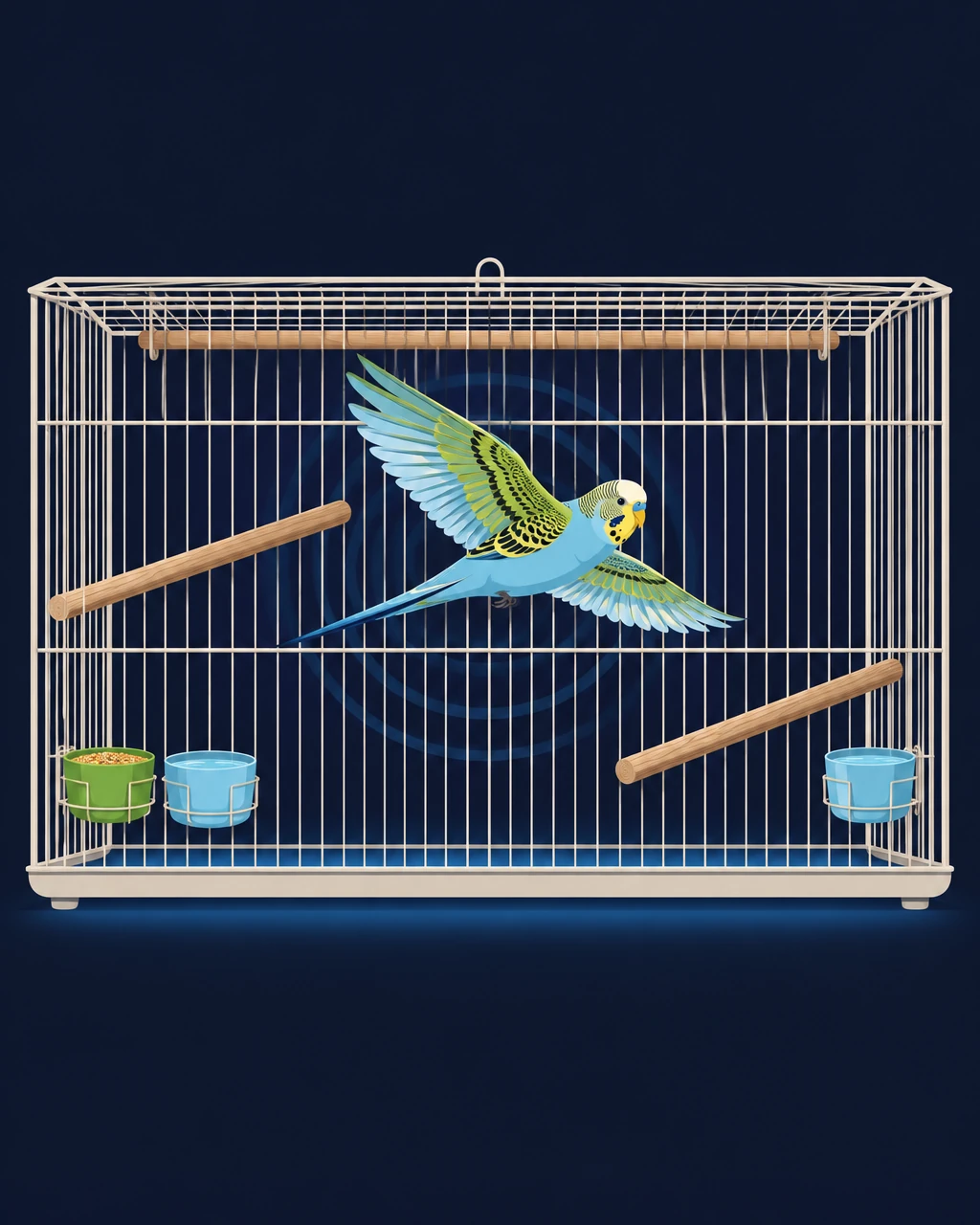
For budgerigars, cage length matters more than height, according to the Parrot Society UK, and the RSPCA's zebra finch guide says to protect length so finches can fly freely. Rectangular cages generally suit budgerigars better than round ones. Birds also need uncluttered space to flap their wings as often and as hard as they like.
As a floor, the RSPCA says the height, width and depth of a cage should each be at least twice the bird's wingspan if it spends most of its time inside, and one and a half times if it spends most of its time out. More is always better.
For finches, the RSPCA says a communal aviary is the ideal. Ask us what suits your space, from a large cage to an aviary.
Layout matters as much as size when you choose bird cages:
At a glance
| Food | What it offers | Worth knowing |
|---|---|---|
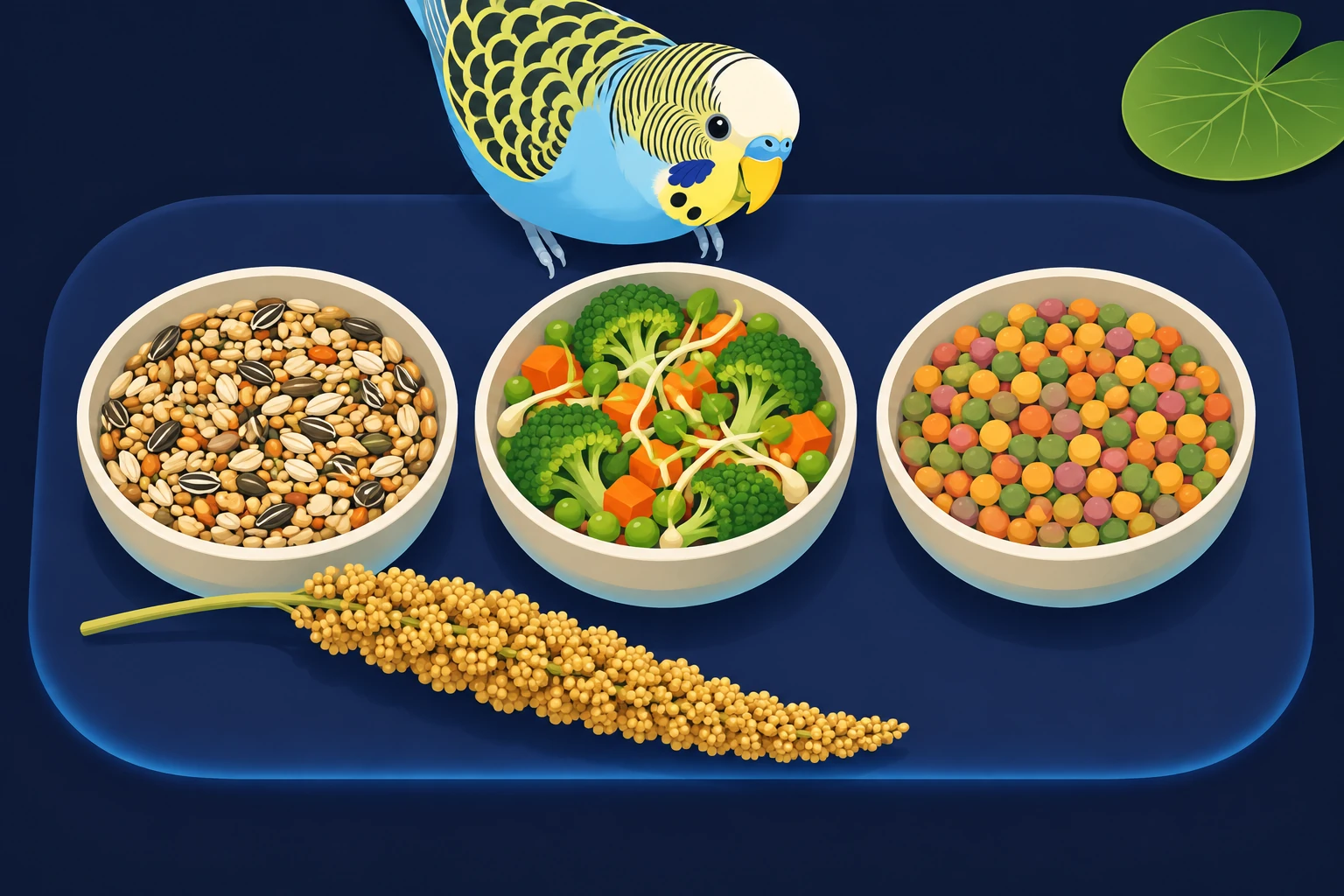
| Seed | Energy, and something to forage for | Bird seed mixes are high in fat and low in calcium and several vitamins. The RSPCA says seed-only diets can lead to obesity, fatty liver disease and vitamin A and calcium deficiency. |
| Fresh vegetables | Vitamins and variety | Washed carrots, broccoli, peas and sprouts are among the RSPCA's safe choices. Never avocado. |
| Pellets | A balanced base | The Parrot Society UK suggests 60 to 80% of a budgerigar's diet as complete pellets, alongside seed, greens and vegetables. |
Zebra finches usually do best on a mixed diet: the RSPCA suggests a finch seed mix, millet sprays and a few live insects such as mealworms. Ask us which mix suits your birds, and keep fresh water available every day.
Good to know
A bird's home is only as safe as the room around it. These are the everyday hazards that vets and charities warn about.
Teflon (PTFE) and other non-stick coatings release toxic fumes when heated, which can cause sudden death in birds.
Aerosol sprays, plug-in diffusers, air fresheners and deodorants can harm birds, and sometimes prove fatal.
Fumes from candles and incense, and smoke from cigarettes, wood-burners and open fires, can be harmful or fatal.
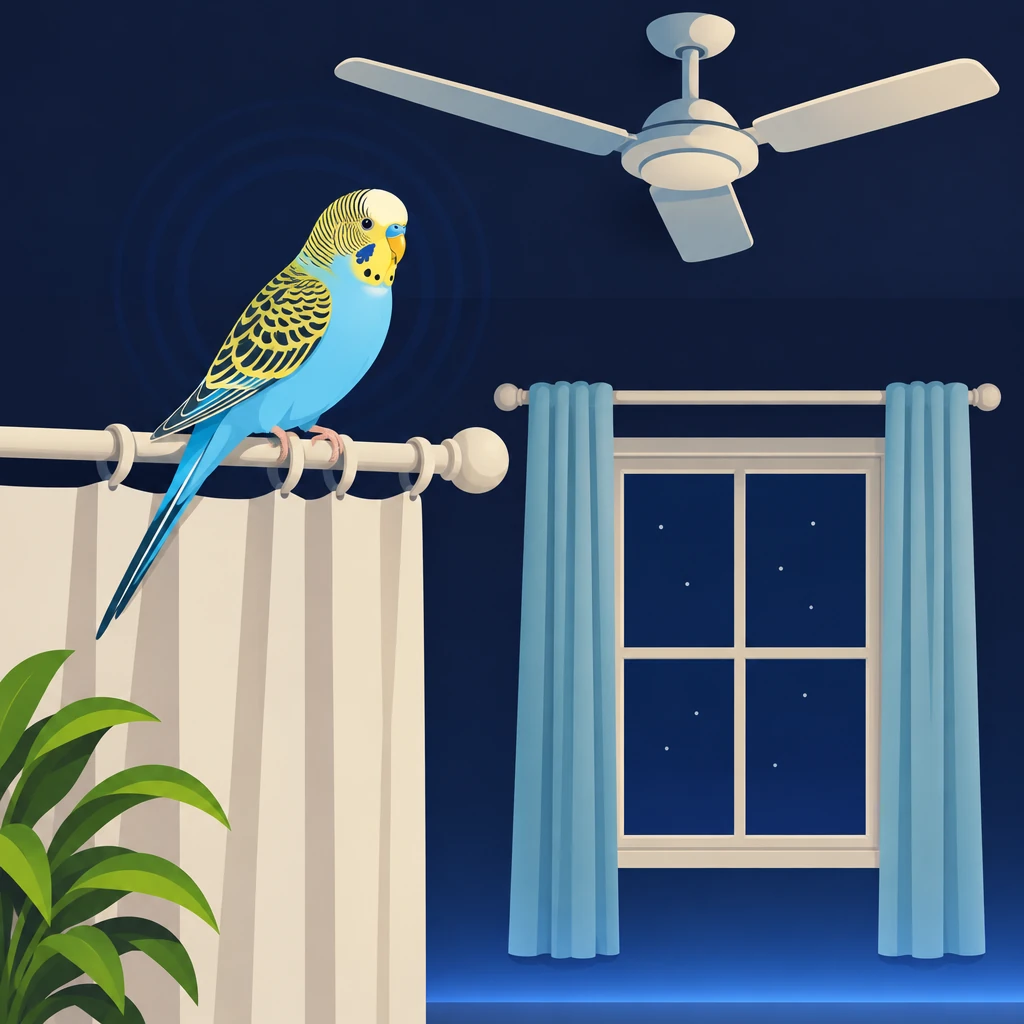
Close them before your bird flies, or it can escape.
Switch them off whenever your bird is out.
Never leave birds alone with cats, dogs or other pets.
Avocado can cause sudden death. Keep chocolate, alcohol and caffeine away too.
Step by step

Check each bird every day. Birds hide illness for as long as they can, so watery droppings, fluffed-up feathers, unusual sleepiness or loss of appetite mean a call to your vet straight away.
Top up the basics every morning.
The RSPCA says pet birds need at least six hours outside the cage every day, with room to fly freely and safely indoors. Do the safety checks first: windows and doors shut, fans off, other pets out. Finches in a big aviary can fly whenever they like.
Foraging keeps birds busy: scatter food, use pipe or puzzle feeders, and offer toys made from untreated wood, paper, cardboard or natural rope.
Budgies need 10 to 12 hours of sleep each night, so give them a quiet, draught-free spot.
Good to know
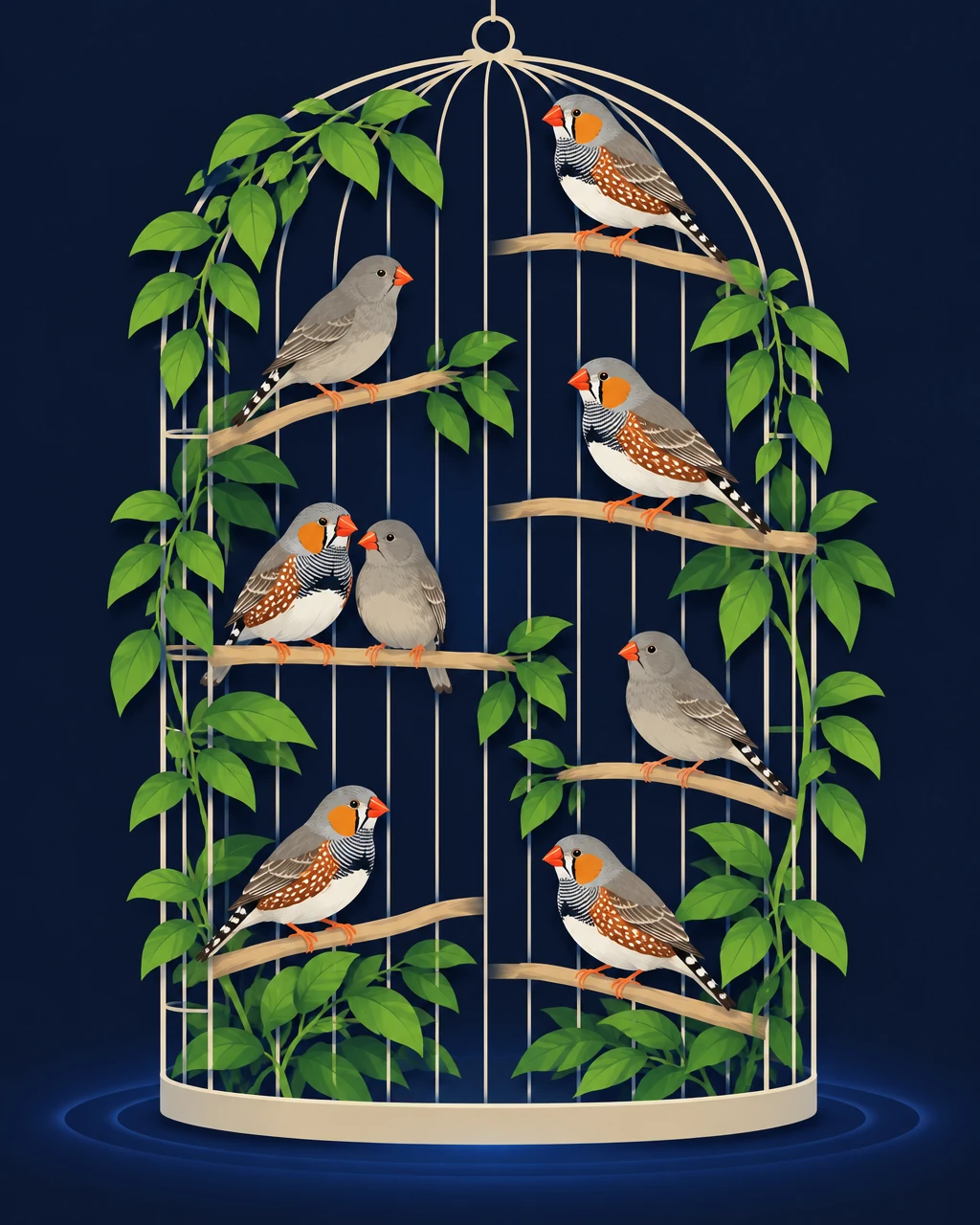
Zebra finches are extremely social. They form long-term pair bonds, and they're happiest in a communal aviary with plenty of perching space. When space is limited, protect length and height so they can still fly. Give them perches at a range of heights, with some high up for roosting.
The same pattern holds for every flock bird: company, room to fly, a varied diet, a safe home and a steady routine. That's what welfare means in practice, and under the Animal Welfare Act 2006 it's a legal duty for every keeper.
Ask us how many birds your space suits before you commit. Stock changes, so call or pop in to see what's in. If we haven't got what you're after, ask. We can order it in, take your number and call you when it's here, or suggest something similar.
The RSPCA says most birds do better with other birds, and the Parrot Society UK says budgerigars should be housed in pairs or groups. A bird kept on its own has only you for company. If you're thinking about one, talk to us first about how much time you can give every day, and whether a pair would suit your home better.
Yes. PDSA says Teflon (PTFE) and other non-stick coatings on pans release toxic fumes when heated, which can cause sudden death in birds. The Royal Veterinary College warns that non-stick pans, plug-in air fresheners and deodorants can irritate a bird's airways and in some cases prove fatal. If a bird may have been exposed, contact your vet straight away.
Birds hide illness for as long as they can, so check them every day. PDSA lists watery droppings, fluffed-up feathers, lack of energy or sleeping more than usual, and loss of appetite as reasons to get to your vet straight away. Sick budgies can go downhill very quickly, so don't wait and see.
The RSPCA says wild zebra finches eat almost only dried grass seeds, but captive birds do best on a mixed diet: a finch seed mix, a few live insects such as mealworms, and millet sprays. Give them fresh water every day and plenty of perching space, and ask us which seed mix suits your flock.
We keep budgies, zebra finches, canaries and cockatiels. Stock changes, so call 01284 703418 or pop in to see who's here. We're open seven days a week. Tell us how much room you have and how many birds you're thinking about, and we'll talk it through with you before you decide anything.
Keep exploring
How we can help
Tell us about your space, your routine and how many birds it suits, and have a chat with the team. We're open seven days a week: Monday to Saturday, 9:30am to 5:30pm, and Sunday, 10:00am to 4:00pm, on Tut Hill at Fornham All Saints in Suffolk, just off the A14.